









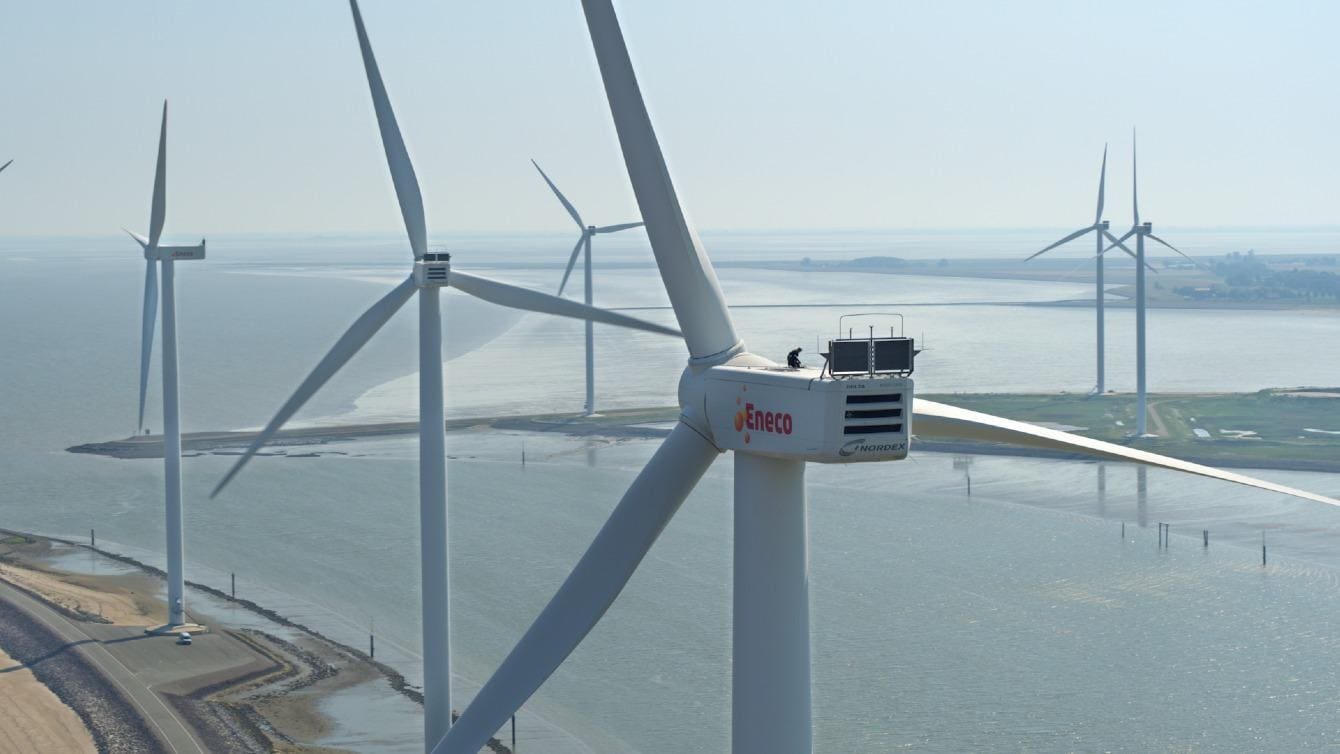
The regulatory environment surrounding supply chain due diligence has shifted dramatically. From the CSDDD and IRBC frameworks to the EU Forced Labour Regulation, companies must now navigate a dense web of overlapping requirements. For renewable energy providers like Eneco, this complexity is enhanced by trade tensions affecting critical materials in wind, solar and battery supply chains.
The moment you're not able to get certain products into the European Union any longer, you will have disruption and delays in the way that you plan to operate your business. This comes at a cost, of course," explains Anna Bulzomi, director Sustainability at PwC, who advises Eneco on HREDD. She points to forced labour bans targeting goods from outside the EU as concrete examples of how human rights concerns are becoming direct trade barriers.
This context demands an agile approach beyond compliance and anchored in business fundamentals. "We adhere to the OECD Guidelines for multinational enterprises on responsible business conduct. This means that when we find risks or impacts far upstream in mining or production countries, we should take appropriate action," notes Hedda Sasburg, Eneco's HREDD Project Lead. "For that we also participate in the IRBC Agreement, to be able to use the collective power for research and actions”.
Prioritising costs and risks: Focusing on what matters most
A persistent challenge in implementing HREDD in the supply chain is the temptation to "cover every issue, everywhere" – an approach that quickly overwhelms teams working with constrained budgets. PwC developed a methodology that fully aligns to responsible business conduct standards, and combines diverse data sets per region and issue. "The question is: how likely is it that there is forced labour, or that there is mismanagement of waste, or that there is pollution? And this is a question we need to answer by using different data sources" says Bulzomi. “Another important aspect is: how severe is the issue, and how much is it influenced or caused by Eneco?” Sasburg adds. For each issue and geography, the Eneco-PwC team uses datasets from UN bodies, labour organisations and credible research groups and advocacy NGOs to assess likelihood and severity.
Competitive tenders through HREDD
Beyond cost control and risk reduction, Eneco's experience reveals how HREDD directly supports business growth, particularly where this depends on acquiring new projects through competitive tenders. "HREDD is currently an essential criterion in participation in tenders for offshore wind," explains Bulzomi. "So how is Eneco going to be more successful? The value of due diligence opens the door to participating in many more competitive tenders for large scale renewable energy projects."
In practice, this means HREDD becomes part of Eneco's commercial toolkit alongside technical capabilities and pricing. "Our business customers all have their own sustainability policies and legal obligations; they will increasingly demand for more transparency in the whereabouts of our supply chains and our efforts in addressing HRE risks,” says Sasburg."
Making HREDD work internally: cross-functional alignment
Perhaps the most critical lesson from Eneco's first implementation phase is that successful HREDD cannot function as an isolated sustainability initiative – the business departments should be involved from day one. "Very often due diligence efforts are an island within the company," observes Bulzomi. "The degree of awareness and knowledge with the sustainability department is very high, but the ability to actually make it work in the supply chain is limited, because that is not their job." To move from concept to impact, procurement, asset management, sustainability and legal must all see HREDD as part of their core responsibilities. Viewed through this integrated lens, HREDD stops being a compliance burden and becomes a strategic lever.
Lessons learned
- Set up an approach that looks at due diligence from all business dimensions: cost control, risk management, growth levers and the potential to build trust with stakeholders.
- Be agile to adapt to changing circumstances.
- Involve various departments related to the value chains early in the project.
- Use current practices, operations and systems as a base for further development.
- Work on commitment by adapting to the language and business concepts used.
HREDD as a source of competitive advantage
For procurement, supply chain, operations and legal professionals navigating similar transformations, Eneco's experience offers a clear message: anchor due diligence efforts to risk, cost, growth and trust from day one, focus resources on genuinely salient issues, and ensure cross-functional ownership. In an era of tightening regulations and shifting trade dynamics, HREDD implemented this way becomes not a constraint, but a source of competitive advantage.
“I think our main value add was to unpack the process for the organization as a whole, lifting HREDD out of ‘pure play sustainability’ and into commercial territory,” Bulzomi says in conclusion. “But it would not have been possible without Eneco, who believed from the very start in the value of an integrated exercise.” Sasburg adds: “PwC also added value by guiding us through the process—starting from a broad perspective on HRE issues and helping us bring focus, while remaining compliant with OECD guidelines.”
This article was written in collaboration with Gerben Meijer, sustainability manager at Eneco and Hedda Sasburg, project lead HREDD at Eneco.
Want to now more? Contact us.