









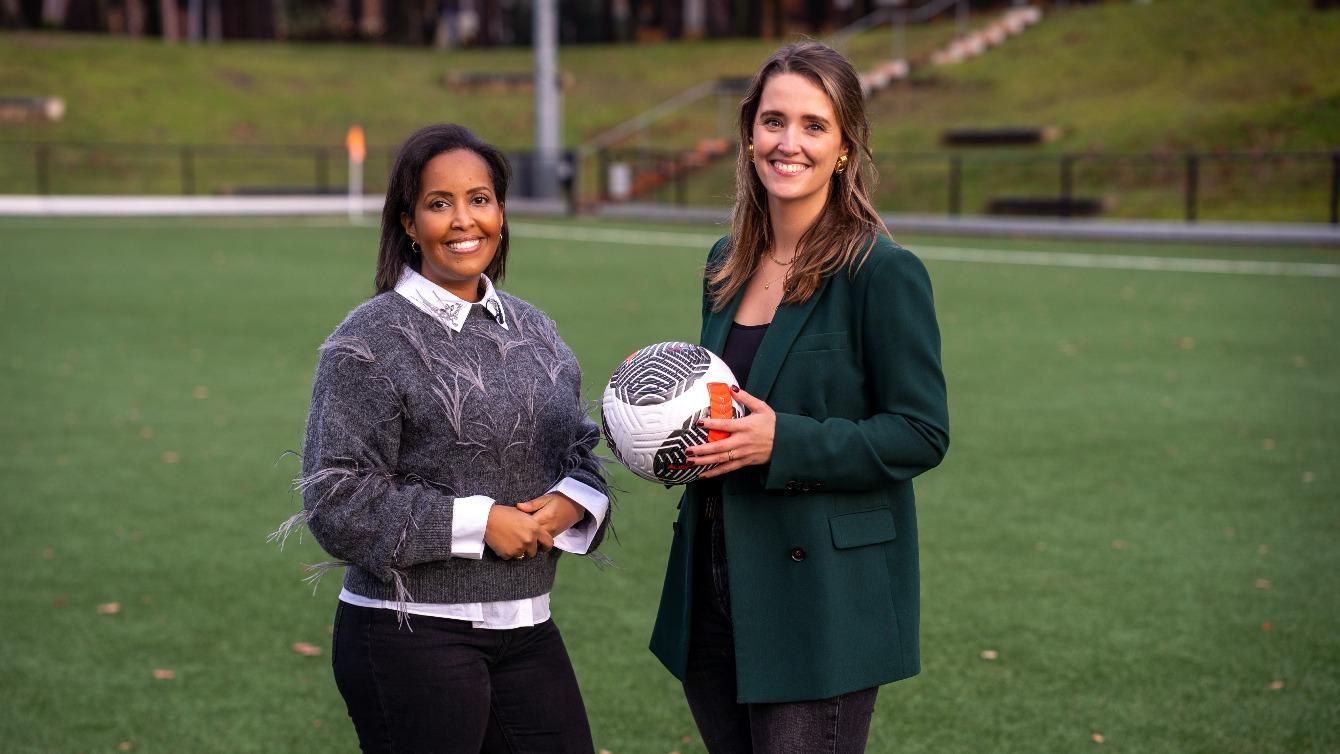
‘The KNVB wants to be an employer who offers everyone equal treatment and equal opportunities. It begins with understanding the current state of diversity within the organisation, across specific roles, and why things are the way they are. Using data effectively will help us find answers and realise the desired change,’ says Fnaan Woldegiorgis.
‘We didn’t draw analyses from the available data’
In the KNVB’s view, the football pitch is not the only place where diversity positively impacts results. In order to thrive as an organisation, the association wants to attract diverse talent, too. Woldegiorgis explains: ‘Within our organisation, few women progress into leadership roles. We were already aware of the numbers, but until now we never drew any conclusions from them; we never connected the dots. For example, the data show that the percentage of women among our job applicants is around 25 per cent. At that rate, it’s no wonder so few women move into leadership roles, regardless of how much we’d like them to.’
‘We need people from outside the sports world, too’
As an employer, the KNVB wants to represent more than football, using ‘the beautiful game’ to make the world a better place through campaigns, local initiatives, and social inclusion activities. Many potential employees are unfamiliar with this side of the football association. Woldegiorgis says: ‘We’re not always “top of mind” as an employer, especially outside the world of sports, or among people with a bicultural background. Yet we really need those kinds of people, too. That’s why we’re working on a single, clear employer brand that reflects our full identity, and our mission to make a positive impact on society. Diversity doesn’t happen by itself. It requires decisive action.’
The employee journey as a compass for inclusive leadership
Before Lisanne Ort and her colleagues at PwC began designing actions and interventions in collaboration with the KNVB team, they set out to understand why women’s progression into leadership roles lags behind across the association. ‘Instead of immediate action, we opted for a careful analysis of what is really going on. The insights we’ve gained from that will help us improve in a more targeted and sustainable way.’
‘We analysed the employee journey, examining how KNVB employees experience the organisation from first contact to exit. We looked at crucial moments that shape an employee’s perception, such as job application, onboarding, career development, and departure. This enabled us to analyse inflow, progression, and outflow, for which we collected both quantitative and qualitative data.’
For Ort and her team at PwC, this approach yielded vital information. ‘Beyond the issue of diversity and inclusion, it helped us to carefully analyse and leverage HR data to reveal patterns and bottlenecks.’ Based on the outcomes, Ort and her colleagues developed a smart HR dashboard that presents all data clearly and visually.

HR dashboard to make data tangible
The KNVB’s Woldegiorgis stresses the importance of a dashboard for navigating in the right direction. ‘Making data visible is the first step: the HR dashboard now clearly highlights the lag in female progression. We want our leaders to be able to make strategic decisions based on real facts. With the dashboard, HR business partners can join discussions across departments about team composition, employee experience, as well as inflow, progression, and outflow.’
Ort adds: ‘With this approach, the KNVB can see clearly how to leverage its employer brand effectively for reaching different target groups, and professionalising internal mobility and succession planning. Another result is that the organisation is now putting a structured exit process in place, with clear roles for HR and managers. All of this will help attract a broader talent pool and increase retention.’
Trusted collaboration between KNVB and PwC
Ort and Woldegiorgis have worked together before. Woldegiorgis explains: ‘Between 2018 and 2020, PwC supported us in developing our first diversity and inclusion strategy for the KNVB workforce. Thanks to this latest collaboration with PwC, we now have a solid foundation on which we can further develop and integrate this topic in the organisation, and in our ways of working. We don’t want to sit back and just hope that somehow more women will take up leadership and key positions. Through the partnership with PwC, we are taking a data-driven approach with the goal of embedding diversity structurally within our organisation.’
Contact us