









How retailers can win may sound like a simple question but the answer involves a multitude of factors which determine why some companies outperform others to become leaders while others lag behind. One of the very few upsides of the past two years has been the unambiguous exposure of the foundations for retail success. Seismic impacts of the pandemic such as store closures and supply chain disruptions have accelerated long-time shifts among consumers to online shopping, sustainability and reliability.
Analysing five years of revenue development at 45 international retailers between 2016 (pre-pandemic) and 2020 (during pandemic), our Retail Monitor research unveils how retailers can win in the roaring twenties. We’ve enriched these findings with a survey among over 120 decision-makers in the retail industry.
The bottom line is that the pandemic offers retailers an opportunity to get ahead rather than an excuse to fall behind. Below we explore six success factors that the research showed separate leading retailers from the laggers.
How retailers win in the roaring twenties
Where do you service your customers?
The most important success factor for retailers in the roaring twenties is omnichannel integration. Our research shows this has been crucial for success in the past years. How can you use this to be successful? In this video we explain all the ins and outs.
Success factor 1: Omnichannel integration
Where do you service your customers?
The most striking success factor for retailers in the roaring twenties is seamless omnichannel integration. Omnichannel involves more than adding an online channel to your business model; it’s also about integrating channels such as store, click & collect and home delivery and offering the same experience through all. How do you meet your customers and know where best to do so? Offering different ways to connect, knowing customers well via data collection, and providing a consistent customer experience help create the best fitting sales approach for each customer, making it easy for them to buy.
Comparing annual growth rates for the past five years, the Retail Monitor showed how retailers offering seamless omnichannel integration significantly outperformed those lagging in their omnichannel set-up. Looking at the difference between the highest growers (leaders) and lowest (laggards) we can see that the spread between them has further increased during the pandemic. Depending on the sector, this increase has been between 26% and 65%, with the Apparel and Furniture & Housing sub-sectors seeing a spread increase of over 60%.
Success factor 2: Social shopping
Who are your customers?
We call the degree to which retailers engage with individual customers via social media and then monetise on this digital engagement ‘social shopping’. No longer seeing customers as a segment, retailers can make a big difference in today’s competitive world by tailoring their offering to individuals.
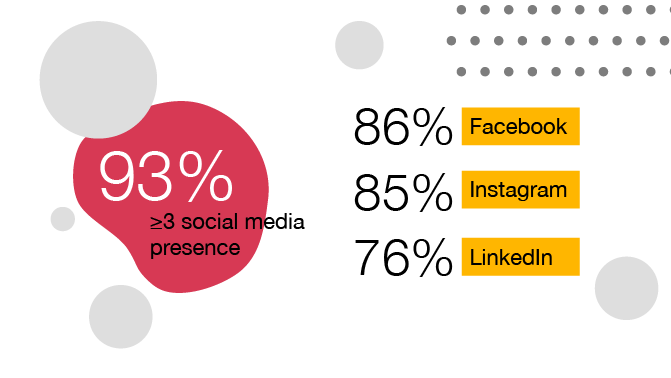
One way to approach customers in this way is to engage on social media. Our Retail Monitor indicates that 93% of surveyed retailers have a presence on at least three channels, using them mostly for marketing, client connection and customer service. The most popular are Facebook (86%), Instagram (85%) and LinkedIn (76%).
Presence alone is not enough – leaders make a difference by using customer data to their benefit. Zalando, a leader in our study, is a good example of a company that has mastered this. Using historical sales data enables it to offer the right outfit via a compelling influencer campaign. Customers feel that Zalando knows exactly who they are, how they like to dress and in what size.
Success factor 3: Personalisation
What experiences do your customers desire and where?
Building on the recognition of customers as individuals, retailers are moving to more tailored offerings. Our study shows that the majority (64%) of retailers have a variety of techniques to target individuals online with special promotions and discounts, including recommendation engines, shopping basket memory and referral codes.
These techniques are increasing sales through online channels and changing the purpose of stores. Stores are shifting towards providing experiences to customers. CanadaGoose has opened an experience store in Toronto, for instance, where a daily snowstorm has replaced the stock. Customers don’t leave the store with a jacket – that is shipped to their home from a central distribution point.

Success factor 4: Convenient delivery

When and how do customers wish to have their product?
Home delivery was heavily accelerated by the pandemic when stores were closed and retailers started up or accelerated delivery options. Delivery is not only about speed, although we have seen deliveries move to same-day delivery or even faster. In short, retailers and their customers value four factors and this is how they target to achieve them:
- Speed through desired delivery time: the customer can decide when to receive the package. Sometimes within two days is more convenient than within one as the recipient is not home before then. Our survey shows that 73% of the retailers make fulfilment speed a top priority;
- Accuracy through delivery slot planning: the more accurate slots can be planned and achieved, the less time customers wait for their parcel. Just Eat Takeaway.com is an example of a company that provides this to customers;
- Reliability through delivering first time right: multiple delivery attempts or drops at depots or neighbours save time and effort for retailers and customers alike. Our study shows that 62% of retailers prioritise diversification of their fulfilment options in order to achieve first-time-right delivery;
- Convenience through add-on services: offering additional services such as payment-on-delivery and immediate returns or alternative delivery options like locker walls and electronic door locks adds greatly to the recipients’ experience. Amazon is an example of a leading retailer that offers innovative add-on services. ‘The Hub’ locker walls are placed in public spaces such as rail stations, stores and schools where customers can pick up parcels on their way home from work or when picking up the kids.
Success factor 5: Product innovation
What do customers expect from your product?
Retailers must maintain the engagement and interest of customers by innovating their products at the speed desired by customers – or preferably slightly faster. While this factor relates more to technology-driven products, product innovation can apply to products and industries too. A good example is Action: while this leading retailer does not have many online sales channels, Action is able to renew its assortment in the stores so rapidly that customers are continuously triggered to visit. One of Action’s key strategic priorities is therefore to continue making its assortment widely available by opening many new stores: Action opens on average 170 new stores each year. The fact that this strategy pays off is seen in Action’s revenue growth from ~2.6 bn in 2016 to ~5.5 bn in 2020.
Success factor 6: Sustainability
How can retailers do all of this in a responsible way?
Operating in a responsible manner in support of a sustainable future is increasingly important. Companies are rated on the ESG framework (Environmental, Social, Governance measures) and often derogated when they fail to score highly enough. Deliveroo’s IPO in early 2021 was unsuccessful, for instance, with investors backing out due to a failure to tick all the ESG boxes.
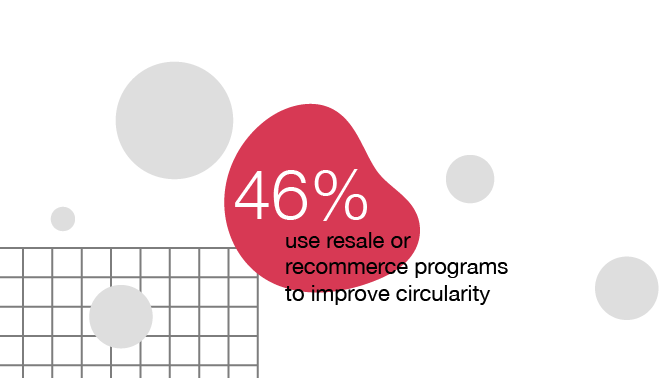
Our research shows retailers making more of an effort to be responsible: nearly half (46%) of those surveyed are using resale or recommerce programmes to improve their circularity. Examples include Apple’s trade-in programme, Coolblue’s lease offering and IKEA’s buyback and resell service. The latter is paying off: IKEA launched the buyback service in Norway in November 2020 and within a year received 5,407 second-hand products that have been given new life: Norwegian customers love it.
Conclusion
The research suggests that retailers do not have to excel at all six success factors to remain or become a leader. One thing is for sure: looking at the leading retailers in the Retail Monitor, none chose a middle-of-the-road strategy. It’s better to excel at one factor than try and compete on all six. We invite you to think ahead as to which success factors you might excel at…
Like to be part of next year’s Retail Monitor’s scope?

We gained and strengthened our study during the DELIVER event in 2021, surveying the participant network of 2000+ retailers about their strategy, ambitions and concerns and sharing our initial insights in a keynote during the live event. Learn more about our participation in DELIVER and the event itself here.

Contact us

Global Client Partner / Industry Leader Consumer Markets, PwC Netherlands
Tel: +31 (0)62 299 15 98