








The Dutch infrastructure is under pressure. Bridges, roads, and dikes need to be renewed, the energy grid expanded, and water safety improved. But budgets are insufficient, construction prices are rising, and technically skilled personnel are scarce. As a result, sustainability requirements are being scaled back to stay within budget. This means that short-term interests outweigh long-term value creation. 'That’s a shame,' says Van Tol, partner at PwC and expert in sustainability in construction. 'Sustainability can actually help to build more cheaply and efficiently—if you approach it in a smart way.'
Standardisation as a lever
One of these smart approaches is standardisation. By working with standard materials, standardised designs, and a fixed, serial method for similar projects—instead of reinventing the wheel each time—we can scale prefab, build faster, reduce failure costs, and make materials easier to reuse.
'The construction sector is accustomed to making something unique for every project,' says Scholten, sector lead Construction at PwC. 'Standardisation makes it possible to build faster and more sustainably, without sacrificing affordability and quality.'
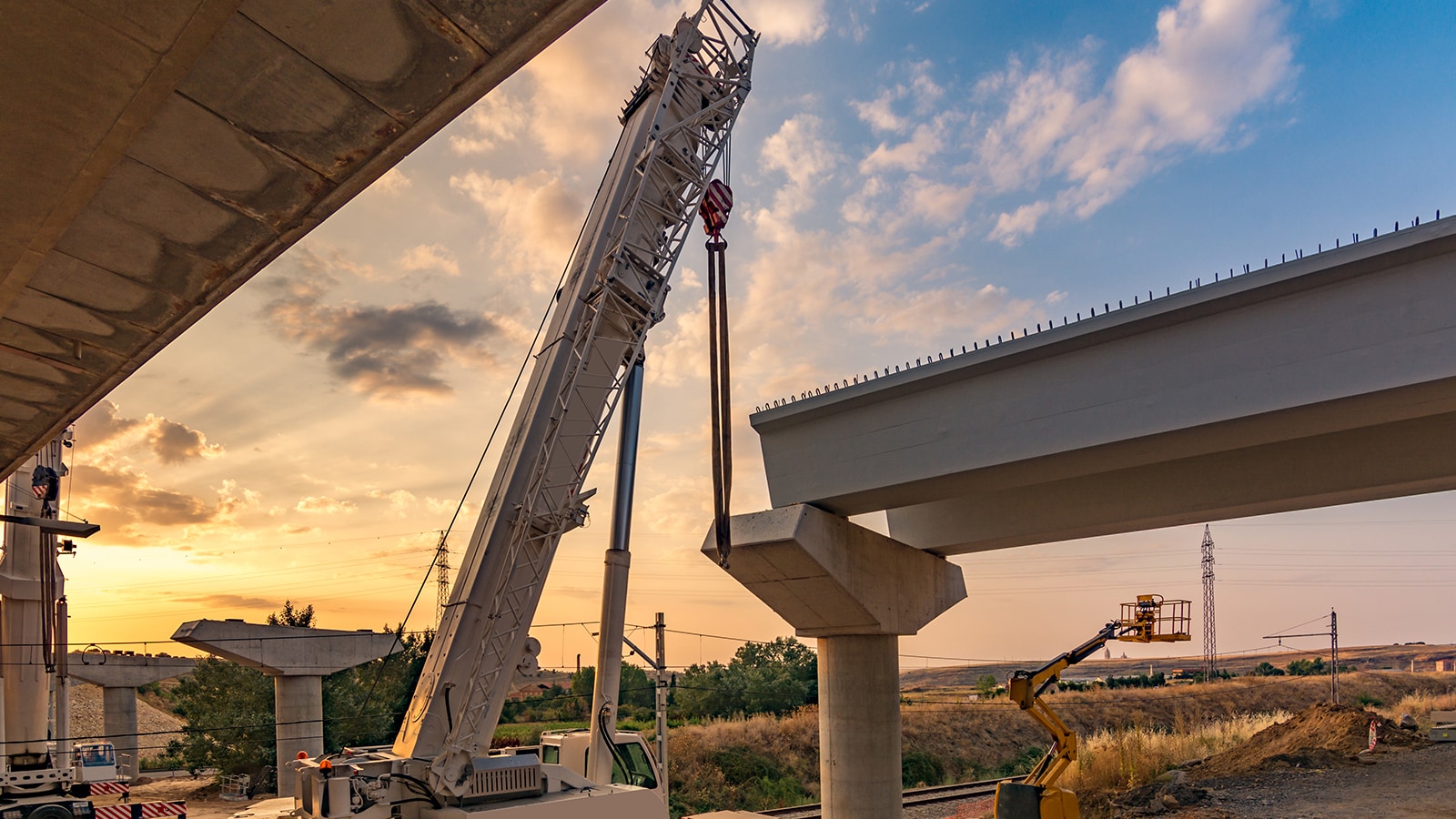
As an example, Scholten mentions beams for viaducts with standard dimensions that can be reused after dismantling, or circular screw piles for foundations. According to her, such solutions save time, material, and money. But they only become truly feasible if the entire chain speaks the same language.
"At Heijmans, we are actively focusing on offsite assembly—that is, industrialisation. More and more infrastructure components are produced under controlled conditions at our own locations. This not only results in fewer failure costs, higher quality, and shorter construction times, but also in fewer transport movements, less waste, and lower CO₂ emissions. By 2030, we want to realise at least half of our above-ground infrastructure prefab: from viaducts and bridges to reforails and traffic installations. By thinking in modular standards, we build faster, safer, and more sustainably—and keep the infrastructure challenge manageable, even with increasing pressure on people and resources."
Collaboration as a prerequisite
Standardisation only works if all parties in the chain cooperate. If one link does not participate, the process stalls—and opportunities are missed. Clients must steer towards standards instead of unique specifications. Builders and their suppliers must jointly invest in standardised materials and designs.
According to Van Tol, it brings tangible benefits for all parties if everyone takes their role. 'For clients, it means lower costs, shorter lead times, and still sustainable solutions. Construction companies can do more with their scarce people and benefit from fewer failure costs and higher predictability.'
'Standardisation enforces economies of scale,' Van Tol explains. 'And that suddenly makes it profitable to invest in sustainable innovations such as more sustainable asphalt or circular concrete products. Without standardisation, such solutions remain too small-scale and therefore too expensive. And that is exactly what the sector needs now: joint action that benefits everyone.'

Marjon Scholten and Wendy van Tol
Doing more with less and building more sustainably
The message from both experts is clear: the infrastructure challenge is too great to keep building the old way. The sector simply does not have the people, resources, or time to reinvent every project.
'The construction sector is at a crossroad,' says Scholten. 'Those who now choose collaboration and smart standards will not only build faster and cheaper, but also open doors to sustainable solutions. So, the question is no longer whether we should standardise, but who dares to take the first step towards a future-proof sector.'
Source: Cobouw magazine – publication date 18-12-2025
Newsletter
Sign up for our newsletter, the PwC Update