









The labour market is thawing. There is work to be done
Coronacrisis underscores the importance of retraining
After having been frozen for almost a year, the labor market is now thawing rapidly. This leads to many enthusiastic seekers for new or different jobs. The enthusiastic seekers soon notice that they have not only started looking differently because of Corona. The job landscape itself has also shifted during the crisis. So work hard to keep appearing well prepared.
The coronacrisis caused an abrupt standstill in the labour market. The first reports of the economic effects of corona were so ominous that it seemed wise to stay where you were. The government came to the rescue with massive aid measures.
But while those measures sustained many jobs in the hardest-hit sectors, many jobs were also lost. Figures from the UWV show that in February the number of new unemployment benefits was almost 46,000. That is more than nineteen percent higher than the year before.
The increase was highest (67.3 percent), especially among young people up to the age of 27. Because they often work in sectors that are struggling, such as catering, retail, tourism and leisure.
Hopes for an economic recovery are growing
We are now a year later, and the outlook is completely different. Corona is not over yet, lockdowns are still being extended in Europe. But hopes for an economic recovery are growing. This is evident from the results of PwC's 24th Global CEO Survey of March 2021. CEOs take courage from the positive developments in the first months of this year: Brexit was ultimately not too bad, the US got a president who is not immediately on a collision course abroad and vaccination against COVID-19 has started. CEOs are making plans again.
And when CEOs start making plans, that is very good news for the labour market. Companies dare to fill vacancies again and the supply is also increasing promptly. It is striking to see how many LinkedIn profiles are suddenly 'open to other business' again.
Especially the Y generation, which is a bit earlier for a new challenge, seems to be looking forward to a new job. And they also have wishes. Corona appears to have made them even more sensitive to 'jobs of some social significance'. The labor market is thawing rapidly.
Another force plays a role in this recovery: technology
There is more to it: the optimism does not hold true for every company and every sector. Many companies will soon recover, but it is exciting for companies that have much more difficulty with that. After all, another force plays a role in this recovery: technology. For corona, the cold feet of cyber-attacks and privacy concerns seemed to hold back digital technology, especially in Europe. But it was precisely digital technology that allowed us to work from home and develop RNA vaccines.
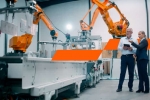
The CEOs in our survey have understood that well, and have become a lot more enthusiastic about the opportunities of digital transformation, in one form or another. This accelerating digitization, which had already started before the coronacrisis, is leading to automation and a demand for other, new skills. And even to the disappearance of some jobs, which are still maintained by the aid packages, but which are no longer required in normal economic life. The so-called zombie jobs.
On a macro scale, this is a gradual process, a kind of tectonic shift. But the tectonics have been accelerated by the corona earthquake. At PwC we have calculated that 1.6 million 'old' jobs will change significantly in the next five years. So much so that the person who now occupies such a job will be a lot less productive at that job in five years if she does not adjust considerably. Those 1.6 million jobs will eventually require a new set of skills. The skills and knowledge that the occupants of the jobs now have are only partly useful for those jobs that are needed in the long term.
Retraining or co-training is required
In order to qualify for these so-called engel jobs, retraining or co-training is required. Our research shows that 82 percent of the skills required for the jobs under pressure can also be used in other professions. Thus, most of the available skills from obsolete jobs are still very valuable in the labour market. In the Netherlands we are fortunate that we have mainly become a service country, and many of us naturally already have skills such as service skills and being able to deal effectively with customers. So for 82 percent the match between jobs and people remains fine.
Large differences can arise between regions
Our research also shows that large differences can arise between regions. For example, in one region there may be less demand for receptionists, while organisations in another region are very much looking for them. In addition to retraining and training, better matching supply and demand between labour market regions is therefore also part of the solution. The fact that half of the Dutch jobs can also be filled from home will help enormously in this regard.
Many LinkedIn networked Yers will have no problem moving with the tectonic change. But as always with this coronacrisis, it is also about helping the large group of workers with a slightly greater distance from the labor market to be aware of the tectonic shift, and to close the productivity gap that is emerging.
Then, of course, we will look at the next cabinet, which should provide incentives in post-crisis policy planning. But those CEOs also have an interest in investing themselves in connecting the skills of the people, while implementing their enthusiastic digitisation plans.
The labour pool is no longer growing, and if we do indeed start to grow again, the historically great scarcity will soon return. Our CEOs from the survey have understood this well. Seventy percent indicate that their investment plans will place more emphasis than before on building the workforce carefully and with an eye for the well-being of the employee.
This also bodes well for labour productivity and wages. Spring beckons.

To help organisations and employees to be fit for the future
The world of work is transforming with a speed we haven't seen before. Changing customer demands and new technologies are impacting products and services, organisations as a whole, and employee expectations. Organisations are looking for new skills among talents to remain relevant. Employees, in turn, demand more flexibility.
On the other hand, COVID-19 forces organisations to rethink the size and composition of their workforce dramatically. What does the Office of the Future and the way we work post COVID-19 look like? Which people with which skills do organisations need to stay successful in the future? How do they become the employer of choice to be able to attract and retain the right talent?


Contact

Jan Willem Velthuijsen
Energy Transition Economist, PwC Netherlands
Tel: +31 (0)62 248 32 93

Follow us


