








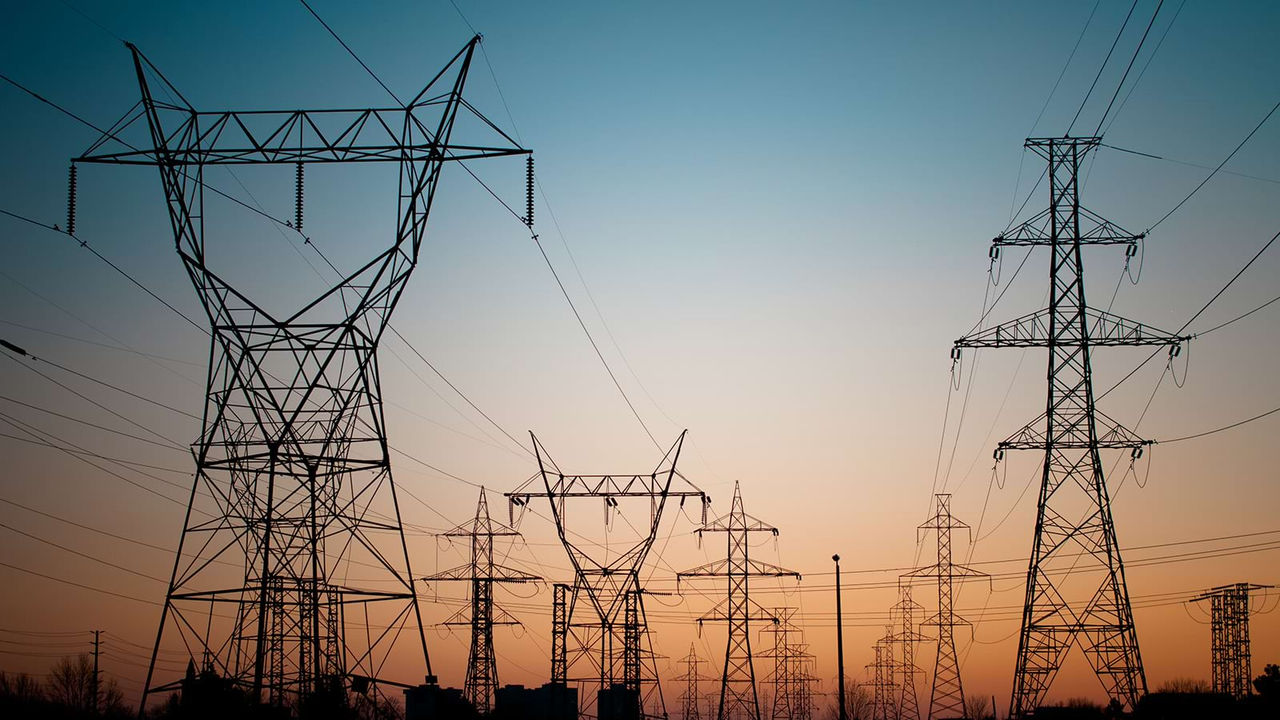
Congestion on the electricity grid is an increasing problem in The Netherlands. It is slowing down the energy transition and economic development, as grid operators are forced to be selective in connecting companies to the network. For years, the Dutch response to grid congestion has followed a familiar script: build heavier connections, expand substations, lay more cables. But constructing new infrastructure takes time; grid operators can no longer keep up with the pace.
Taking a revolutionary approach
The researchers and partners behind MegaMind decided to take a different approach. In the end of 2020 they received funding from the Dutch organisation for Scientific Research (NWO) to investigate the use of artificial intelligence (AI) and data analytics to help address grid congestion. The acronym is telling: Measuring, Gathering, Mining and Integrating Data for Self-healing Smart Electricity Distribution Grids. The findings of the project participants are that congestion is not simply a physical bottleneck; it is also a coordination problem. The issue is not just how much capacity the system has, but how effectively it can respond to peaks, local constraints and shifting patterns of demand.
The initiators were early movers, as at that time grid congestion was barely an issue and AI was still in its infancy. “ChatGPT wasn’t even launched yet. At the time, our approach was actually quite revolutionary”, says Ghelmer Brilleman of PwC. With his extensive experience in the utilities sector, he leads digital transformation efforts, focusing on practical AI solutions that enhance grid coordination and flexibility.
‘Thanks to intensive collaboration, our researchers gained access to real data. This was crucial, as we aimed to solve concrete congestion challenges.’
Nilufar Neyestaniassistant professor at TU/e
A unique collaboration of science and market
The project itself started at Eindhoven University of Technology (TU/e). Koen Kok, professor of Intelligent Energy Systems, explains that the initiative originated from the university’s Electrical Energy Systems group and was designed from the outset as a multidisciplinary effort. “We already decided that it should be a combination of power systems, AI and regulation”, he says.
Jan-Willem Sanders, who worked on the programme from PwC’s side, brought a background in economics, information system design and analytics. Nilufar Neyestani, assistant professor at TU/e, helped steer the scientific side of the programme. From the start, MegaMind was never intended as a narrowly technical exercise. It was built around a broader question: whether digital intelligence, local flexibility and better market design could help relieve pressure on a grid under growing strain.
What makes MegaMind unique is its broad scope. Four technical universities are involved: TU/e, TU Delft, Tilburg University, the University of Twente and Erasmus University Rotterdam. In addition, the grid operators Alliander, Stedin, Enexis and TenneT are partners. Other participants—besides PwC—include TNO, Smart State Technology, Equans, IBM and transport company Transdev.
“That combination of the scientific world and market parties really worked well”, says PwC partner Jan-Willem Sanders. “At the start we organised several awareness sessions where market parties explained their dilemmas and challenges, and the scientific community shared the state of their research and how it could contribute to solutions. That created a great deal of mutual understanding.”
“I agree that this has been a great strength”, adds Nilufar Neyestani from TU/e. “Through this close collaboration, our researchers gained access to real data. We needed that, because we were looking at actual grid congestion problems to solve. During discussions with market parties, we got a real sense of what is happening in practice and could develop relevant solutions.”

‘Congestion will not disappear. The solution for the future lies in responding to the real-time state of the grid.’
Koen Kok,professor of Intelligent Energy Systems at TU/eFrom capacity to coordination
After five years of close collaboration, the MegaMind project is approaching its conclusions. The first and most important lesson is that the Dutch market still relies too heavily on network expansion alone. Neyestani summarises it succinctly: “We need to move from capacity to coordination”.
This goes to the heart of how the Dutch grid will need to operate in the years ahead. New infrastructure is essential, but it will not keep pace with an economy that is electrifying while also becoming more digital, decentralised and responsive. New cables and transformers buy time; they do not remove the need to operate the system differently. In Neyestani’s view congestion will remain a structural feature of a power system that is decarbonising rapidly. Every time more capacity is created, more electrification follows.
TU/e professor Koen Kok makes the same point from a systems perspective. Dutch electricity demand has not increased in a simple linear fashion, he notes, but peaks have become sharper and more synchronised. Heat pumps switch on in similar time windows, electric vehicles charge at similar times, and new industrial loads tend to cluster. “Congestion is not going to go away”, he says. “The solution for the future is to respond to the state of the grid.”
This matters because much of the grid is still designed around rare, extreme moments. “We build a grid for the highest peak we expect in 40 years,” Kok says. “But that peak only occurs for a few hours over the grid’s lifetime.” That is an expensive way to run a rapidly changing electricity system. If every local bottleneck is treated as proof that physical expansion is the only viable solution, the country risks locking itself into a costly and slow response.
PwC’s Sanders puts it more bluntly: “There’s no silver bullet for this. Keep building, yes. But relying on expansion alone would drive up costs across the board. Flexibility, forecasting and local control are not soft alternatives to real investment - they are ways of using the existing grid more effectively while physical expansion catches up. This improved coordination could prevent billions of investments in the grid in the coming years.”
What coordination looks like in practice
The easiest way to understand this development is to look at where it is already happening. Electric bus fleets are one example. Once public transport operators electrify, energy is no longer just a background utility but becomes part of the operational puzzle. Charging schedules, departure times, battery levels and local network constraints all need to be managed together.
“If you look at companies like Transdev, it certainly is”, Kok says, when asked whether energy has become a boardroom issue. That represents a significant shift. In many sectors, energy used to be something companies assumed would always be available. Now it is becoming an integral part of the business model. The same applies to business parks, energy hubs and the growing interest in virtual power plants. In each case, the challenge is not simply to consume electricity, but to use it at the right time, in the right place and with a clear understanding of what the local grid can handle. MegaMind gives insight in how to benefit from being flexible with this operation and create revenue by participating in local markets.
The researchers also emphasise the crucial role of grid operators in maintaining system stability. As the electricity system becomes more digital, local and automated, congestion turns into what Neyestani calls a ‘cyber-physical problem’. The grid is no longer just hardware; it also consists of data flows, software, communication between actors and coordination across different system layers. This is where coordination between transmission system operators (TSOs) and distribution system operators (DSOs) becomes essential.
Data without handing everything over
This leads directly to the second major conclusion: advanced data analysis and AI can unlock flexibility without turning the energy system into a privacy nightmare. This is particularly relevant in the Dutch context, where concerns about privacy and control quickly arise once digital coordination enters the discussion.
Neyestani says these concerns were taken seriously from the outset. “We understand and acknowledge privacy and security as a concern”, she says. At the same time, she argues that it is entirely possible to design solutions that rely on non-sensitive or locally processed data while still ensuring a high level of security. Effective coordination does not always require intrusive data sharing. Intelligence can remain close to the source, with systems working on patterns, constraints and signals rather than exposing all underlying details.
Kok adds that this logic was embedded in the project from the beginning. Data availability in the grid is uneven, especially in distribution networks, which are extensive, highly granular and only partially digitised. The challenge is not only to collect more data, but also to infer what is happening where direct measurement is limited. This is where AI proves valuable—not as a fashionable add-on, but as a practical tool.
“We are now in what you could call the third wave of digitisation in the energy sector”, Kok says. In distribution grids, AI can create ‘soft measurements’ or state estimates in areas where direct monitoring is lacking. The Dutch distribution grid is vast, and visibility remains limited in many parts. “We are only just beginning this whole digitisation process”, he says.
Not the kind of AI people worry about
This distinction matters for another reason. In public debate, AI has become an overloaded term, often associated with energy-intensive language models and massive data centres. That is not what MegaMind is about.
“The models used in MegaMind are far less energy-intensive than the generative systems that dominate the headlines”, Brilleman says. “This is not about applying AI for the sake of it. It is about using targeted digital tools to estimate, predict and coordinate more effectively.”
Brilleman also notes that the European privacy debate can sometimes be overly simplistic. “The privacy card is easily played”, he says. That does not mean privacy concerns should be dismissed, but it does mean the debate needs to be more precise. Flexibility does not always depend on highly personal household data. In many cases, it is sufficient to understand network patterns, provide the right incentives and allow devices or local systems to respond. “There are definitely solutions here.”
The use of AI and data analytics can also bring additional benefits. The energy transition is leading to more local energy markets, enabling decentralised, peer-to-peer trading of locally generated renewable energy. This reduces strain on central grids and allows consumers to become prosumers. However, there is a risk: while large national markets can absorb many participants without any single actor influencing prices, smaller local congestion areas cannot. If only a few parties control most of the available flexibility, strategic behaviour becomes easier.
Kok explains that in small, concentrated markets, participants can influence prices instead of simply responding to them. MegaMind research explored how machine learning could detect such behaviour and support mechanisms that make manipulation more difficult, thereby safeguarding local energy markets against market power and abuse.
Technology is moving faster than the rules
If the first lesson of MegaMind is that the grid needs more coordination, and the second is that advanced data analysis and AI can help provide it, the third is perhaps the most uncomfortable: regulation is lagging behind. A key part of the project therefore focused on regulatory constraints.
“Basically, we need network-aware market mechanisms”, Kok says. Market design and tariff structures still reflect a more static electricity system than the one now emerging. In many cases, they do not reward the kind of responsiveness and local flexibility that could ease pressure on the grid.
Kok is sceptical of simplistic solutions such as time-of-use tariffs. While they may look effective on paper, in practice they can simply shift the problem from one time slot to another. The alternative is not a centrally controlled system where an authority dictates when everything can be switched on or off, but a more dynamic approach: automated signals, better incentives and interaction between devices, users and markets that reflect real network conditions.
Brilleman sees a similar issue from the market perspective. The new Dutch energy law is a step forward, he says, as it creates more room for data sharing and better reflects the division of roles within the system. “But it still does not go far enough. In an ideal system, the edge of the grid would become a space where many actors can respond automatically to changing incentives and local constraints. That future is only partially enabled today.”
Neyestani notes that MegaMind encountered this gap repeatedly. The project examined not only local markets, but also the broader mismatch between digital innovation and existing regulation, including the AI Act. “We have the technology and the models that could support flexibility”, she says, “but there is not enough regulatory support for it.”
This gap becomes visible in practical examples. Batteries, for instance, still struggle in the Netherlands because regulation does not sufficiently reward their contribution to system flexibility. Energy taxes, tariff design and access to metering data can all work against the flexibility policymakers aim to promote.
The impact of MegaMind
MegaMind is nearing the end of its formal lifecycle, but not in the sense of a project that concludes on paper and disappears in practice. The programme involved nine PhD candidates and two postdoctoral researchers across several universities and institutes. Some have already completed their work, others are close, and some are still finishing. Many have already moved into roles within the sector, taking their knowledge with them. That, too, is part of the project’s impact.
MegaMind has not only produced models and academic papers; it has also helped train a new generation of experts who understand the grid as a technical, digital and regulatory system simultaneously. There is also follow-up work in development. Other projects are already building on elements of the MegaMind agenda.
MegaMind does not claim to have solved grid congestion. What it does show is that the Dutch debate must move beyond its old reflexes. More capacity is necessary, but on its own it is not a strategy. The next phase of the energy transition will depend just as much on how effectively the system can observe, predict, coordinate and adapt.