






If global water facilities do not improve, the United Nations warns that by 2030 billions of people will lack access to safe drinking water—a basic condition for life, health, and well-being. Dutch startup Element15 is changing that village by village in Ghana, West Africa, with an innovative water filter. PwC is helping to grow the concept into an economically sustainable, scalable solution.
Element15 was born from spontaneous experiments by founder Ingmar Barendregt. He began extracting phosphorus from urine and later worked at converting urine into clean water. This ‘backyard engineering’, as he calls it, laid the groundwork for Element15, named after the 15th element in the periodic table, phosphorus. ’The urine trials proved too complex for further development. But in 2022, during a trip to Namibia, I realized I did have a practical system for removing bacteria, heavy metals, and sediment from drinking water. That’s when I thought: this is what I want to do. Shortly after, I resigned from my job at PwC.’
The BAR filter system
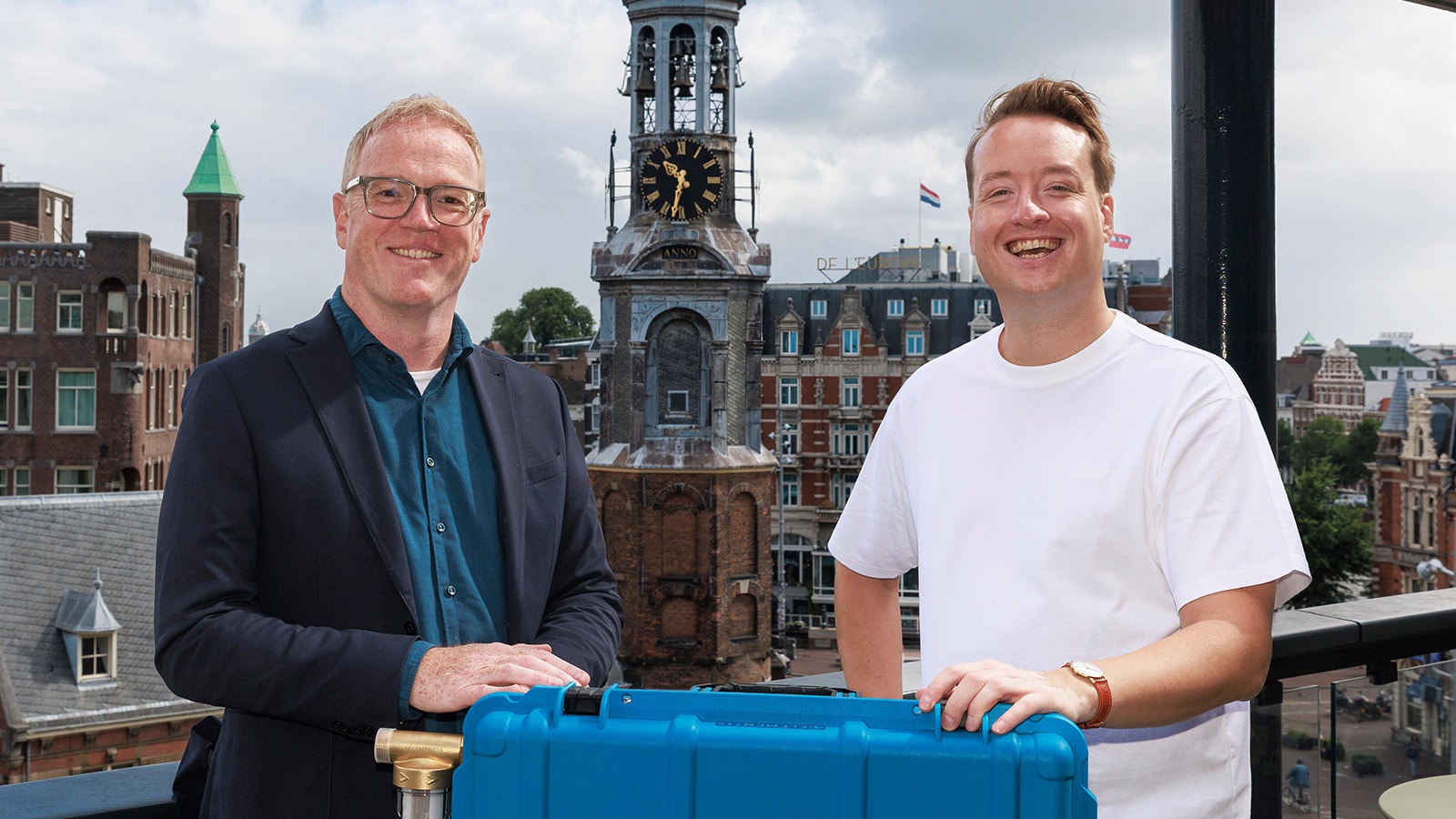
In northern Ghana, where millions live without safe drinking water, Element15 has already transformed 190 local water sources. In Tanzania, another 50 sources across five rural communities now provide safe drinking water. The solution is Element15’s so-called BAR filter system, an innovative purification technology packaged in a compact blue box. ‘What’s innovative about it is that we are connecting the technology to existing water supplies in remote villages,’ Ingmar explains. ‘The system requires no electricity, can be hooked up to an existing source or tank, and with a capacity of more than 3,300 litres per hour, it can supply an entire village with safe drinking water. The treated water meets World Health Organisation (WHO) standards and has the same taste and quality as bottled water. Plus, we can tailor the filters to tackle location specific contaminants.’
PwC in action
Through an existing connection between Ingmar and Friso Wiegman, director of Public Sector Consulting at PwC, the two organisations first met in September 2023. Friso recalls: ‘When we heard about Element15 and the challenges Ingmar is tackling, we immediately wanted to explore how we could contribute. PwC often shares knowledge, skills, and expertise on a pro bono basis with social organisations. Everyone at PwC can take part—it’s actively encouraged.’ Soon, four new action points appeared on PwC’s agenda:
- Supporting an investment application for Element15
- Advising on opening a branch in Ghana
- Arranging tax compliance across the countries involved
- Developing a business model to help Element15 become independent of subsidies
A sustainable revenue model
Friso explains why subsidy-independence is crucial: ‘Subsidies can help kickstart a project like this. However, unfortunately, initiatives lacking a solid financial model often start to flounder when the flow of subsidies slows down.’ Ingmar adds: ‘The BAR is installed locally by Element15 technicians. Maintenance requires ongoing investment, such as replacing filters and paying local staff. Communities can’t afford this. In the model we developed with PwC, revenue and cost are balanced. The model ensures economic sustainability and enables scaling.’
More revenue, more impact
The model is built on carbon credits, Friso explains. ‘Thanks to the BAR, people no longer need to boil water over open fires to make it safe for consumption. That yields measurable reductions in greenhouse gas emissions, including CO₂. We convert these emission savings into Gold Standard– certified carbon credits.’
Ingmar is excited about this approach. ‘Carbon credits help external parties achieve their climate targets, while allowing Element15 to remain operational and grow.’ With increasing revenues from sold credits, Ingmar hopes that by around 2028 Element15 can scale to other continents. ‘More BAR systems mean more safe drinking water and lower emissions. That means more carbon credits, more income and investment space, and increasing impact. It’s an upward spiral.’
Equal opportunities
The work of Element15 contributes to clean water, poverty reduction, climate goals, and other Sustainable Development Goals (SDGs). It also fosters equal opportunities—a key theme in PwC Netherlands’ social strategy. ‘The BAR gives villagers a better chance at a healthy and longer life,’ says Friso. ‘Especially children, who are often victims of waterborne diseases, like diarrhoea and cholera. We’re already seeing less illness and absenteeism in schools, which means better opportunities for kids to graduate and build a future. Women spend less time collecting firewood and boiling water, freeing up time to get training or a job. On top of that, Element15 creates local jobs for operators and technicians. In all these ways, it is creating more and better opportunities for disadvantaged communities.’
Like colleagues
‘Without PwC, Element15 would not be where it is today’, says Ingmar. ‘Beyond their practical advice and actions, PwC’s reputation helps too. Saying you’re getting support from PwC builds trust worldwide. And working together is a pleasure, too. The people at PwC communicate clearly, give full attention to the issues, bring in the right specialists, and work incredibly fast. Every time they agreed to take up certain tasks, they had ticked them off before I knew it. Entrepreneurship is exciting, but it can be lonely too. With Friso and the PwC team, I feel surrounded by colleagues.’
Want to explore how to create social impact together, or strengthen your organisation’s social sustainability positioning?
Visit our web pages on social sustainability or contact us directly.
Contact us