









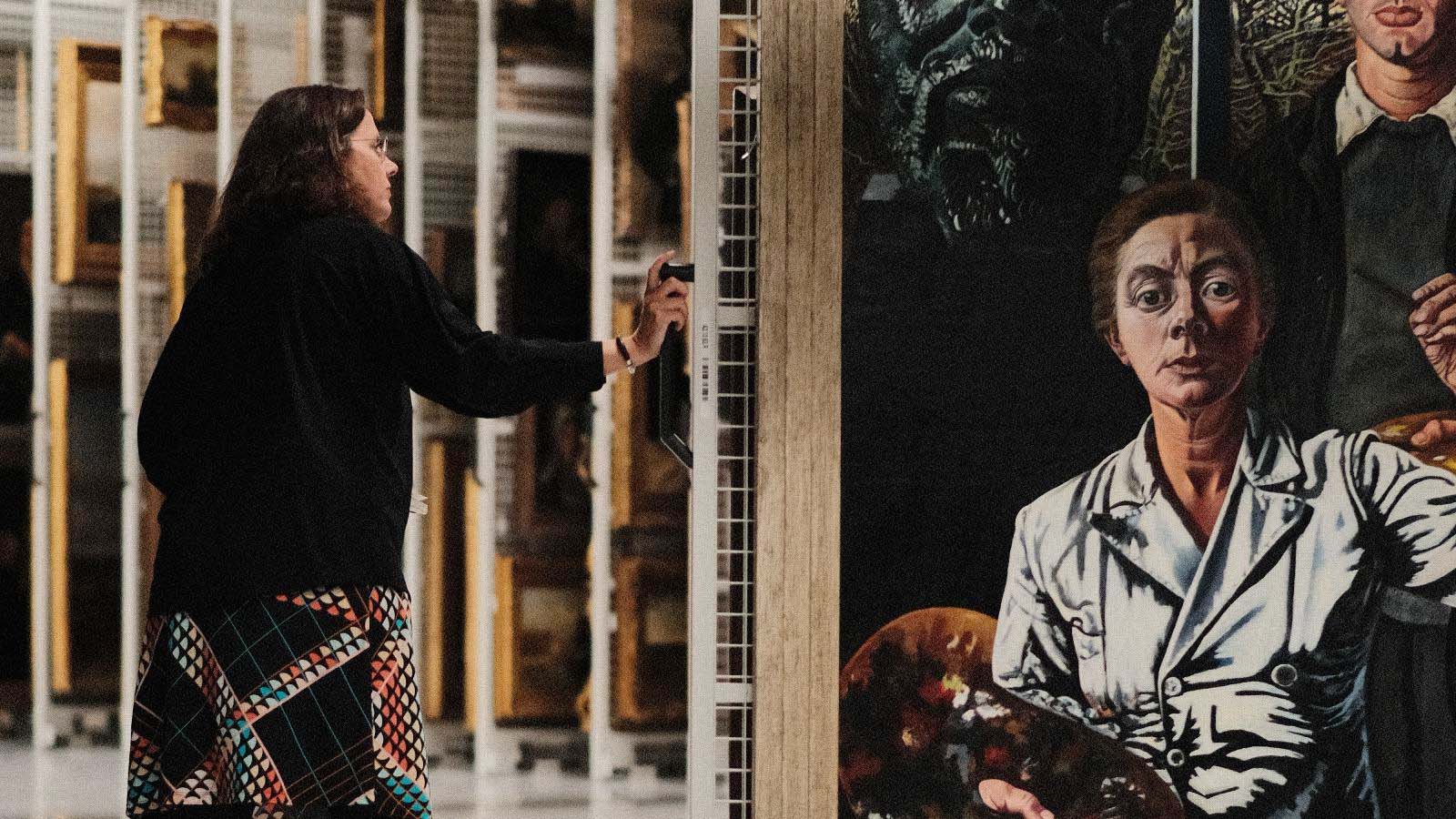
The role of female donors to Museum Boijmans
Over 500 donations traced back to women
“The focus has often been on male collectors, while women have played a crucial role in the museum’s history,” says Sandra Kisters, Director of Collections and Research at Boijmans Van Beuningen. Art historian Bram Donders and PwC data analyst Irene Vooijs investigated who these women were. Using data and technology, they brought the female donors behind the collection to light.
In 1999, the museum celebrated its 150th anniversary. Kisters: “We published a book that explored the stories behind the collection. A few women were mentioned, but the emphasis was on prominent male collectors. Over time, only the names of men would appear in the collection registration system, despite the meaningful contributions of women. In recent years, we began to question this, as we didn’t have all the information readily available.”
Kisters enlisted the help of art historian Bram Donders, who researched the role of women in art history. “The Boijmans collection is vast, and many works were donated—which is quite remarkable. It raises the question of why people chose to donate. But much of the background information was poorly documented, so we didn’t know which women had donated works,” Donders explains.
Ultimately, more than 500 women were found to have donated works to the museum. “That means one in five pieces in the museum was donated by a woman, which makes their impact on Boijmans’ art history significantly greater than previously thought,” says Donders.
To uncover more, Donders spent considerable time in the Rotterdam City Archives. “There’s a wealth of information there—letters from female donors, documents mentioning their names. But there were so many pieces that it was difficult to connect the dots on my own,” he says.
“AI and web scraping made the data tangible”
To accurately identify and contextualisze these women, PwC data specialist Irene Vooijs joined the project. Donders: “Irene is an expert in using advanced tools to extract and connect data. Thanks to her, I quickly gained insight into family ties and historical context. Where I struggled to identify the female donors, she could isolate the data with a single action. This clarity allowed me to visualisze concrete numbers and patterns in the donations.”
Vooijs adds: “The data sources Bram collected needed a clear structure. Boijmans has thousands of donors. In this project, we focused on hundreds of female donors—numbers that are hard to manage as an individual researcher.”
Technology played a key role in the research. “We used AI to analysze scanned annual reports—some centuries old—to identify references to female donors. Web scraping was also essential to systematically collect and analysze publicly available data from birth, marriage, and death records,” Vooijs explains.
A significant donation after a historic fire
One story uncovered by the research of Bram Donders and Irene Vooijs is that of Cornelia Marjolin-Scheffer. As an artist, she donated several works by her father, the renowned painter Ary Scheffer, to the museum. Kisters: “When the museum was struck by a devastating fire in 1864, earlier works by Ary Scheffer were lost. Out of a sense of responsibility and a desire to keep her father’s art accessible to the public, Cornelia decided to donate even more works.”
According to Kisters, donors like Cornelia Marjolin-Scheffer play a vital role in the museum’s history. “Thanks to these kinds of donations, the museum has always had access to important art. Recogniszing these contributions is essential to honouring the institution’s own history. Women have played a much larger role in our art history than we previously realised.”
“Inspiring young girls to enter the art world”
A few years ago, Museum Boijmans Van Beuningen joined the platform De Andere Helft (“The Other Half”), which focuses on female figures in museum history. Kisters: “We’re not only looking at female artists, but also at female art critics, museum staff, donors, and collectors. With this initiative, we aim to better understand the role of women as mediators in the art world. By sharing these stories, we hope to inspire young girls from diverse backgrounds to pursue careers in the arts.”
Donders concludes: “It remains important to tell the story of Boijmans and art history more broadly—not just from the perspective of wealthy white male collectors. The museum’s story is much more diverse and deserves to be enriched with these new insights.”
Always up to date
Sign up for our newsletter, the PwC Update
Contact us