









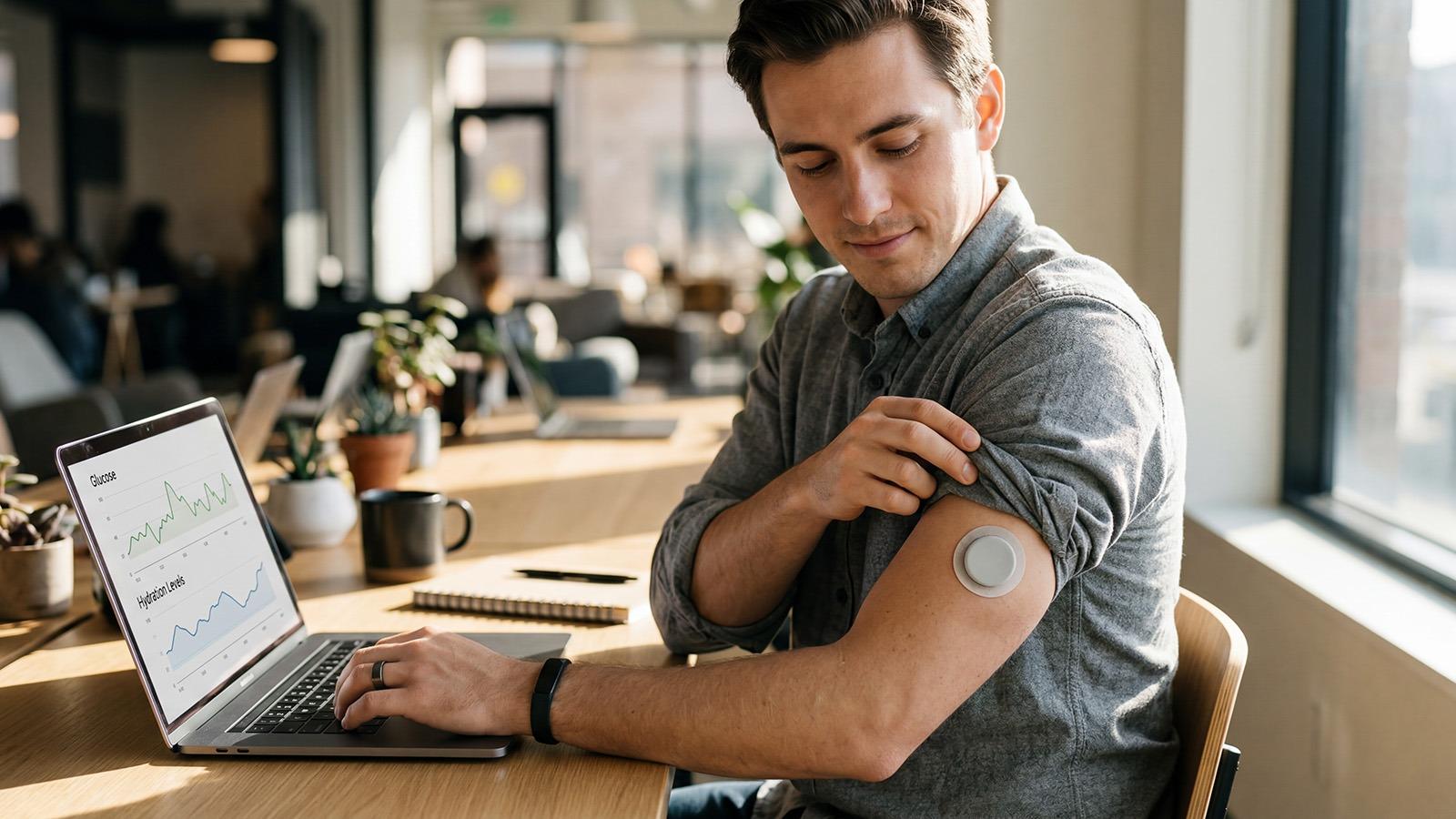
This picture emerges from The Voice of the Consumer 2026, a global survey of consumers' desires and preferences, with this year focusing on health. Globally, 21,808 consumers participated in the survey, including 1,003 in the Netherlands.
The existence of a wide range of health goals translates into a broad interest in products and services
The Voice of the Consumer reveals that consumers set goals in a wide range of areas, from stress reduction, better sleep and weight loss to appearance, personal development and self-confidence. This shows that, for consumers, health is not limited to the prevention and treatment of physical complaints and extends to the area of personal care and wellness. The wide range of goals translates into a broad interest in products and services. Food supplements and care products represent the largest field of interest, but coaching, behavioural change, gaining new experiences and travel are also on people’s wish lists.
Respondents to The Voice of the Consumer indicated that, when it comes to taking actions to improve their health, they are mainly guided by their own curiosity and their social environment, such as friends, family and colleagues. Younger respondents in particular indicated that they are also influenced by influencers, as is also shown in PwC’s retail monitor.
Strong interest in smart technology if the price is not too high
The data furthermore reveal a strong interest in smart and other technologies that provide insight into health and behaviour, or that assist with making associated adjustments. Examples include a ring that monitors sleep, an app that supports training and a smartwatch that measures your heart rate. Thanks to improved sensors, user-friendly apps and subscription models, these products can develop into platforms for monitoring, guidance and improvement. At the global level, 82 per cent of respondents had a wearable; for the Netherlands, this share was about 73 per cent.
At the same time, the wide availability of technology does not mean that consumers automatically adopt every technology they come across. Price appears to be a decisive factor for 75 per cent of Dutch respondents (compared to 68 per cent globally). In addition, consumers expect clear value for money, ease of use and opportunities for personalisation.
Consumers reluctant to share data
Consumers are not prepared to unreservedly share data about their health. This willingness is limited at the global level and is even lower in the Netherlands. At the same time, these data form the basis for mapping preferences, predicting behaviour and personalising products and services. Peter van Kampen: ‘Sharing data is a precondition for personalisation. Almost all companies want to take further steps in this regard because doing so would allow them to approach their target groups in a very targeted manner. Consumers also have a need for personalised products and services, but they must trust that these data will be kept safe and will be used responsibly.’
Increasing data security and trust offers a key competitive advantage
Companies in the consumer sector must therefore work on security and trust, say Milo Hartendorf and Peter van Kampen. PwC's Digital Trust Insights, published earlier this year, show that 76 per cent of companies in this sector want to increase their cybersecurity this year. Milo Hartendorf: ‘Companies that are active in the consumer sector are vulnerable. For example, if they scale up their loyalty programmes to increase customer engagement, this means building up large amounts of sensitive customer data and, in doing so, increasing their risk profile. In addition, these companies often have large supply chains, which means they can also be affected by leaks at third parties. The Digital Trust Insights show how difficult they find it to manage these risks. In other words, there is still work to be done.’
Peter van Kampen emphasises that building trust is important here as well. ‘Consumers don't want their data to be publicly available and want companies to be transparent when something goes wrong in this regard. They also want companies to handle these data responsibly, for example by not selling the data on to other parties without their knowledge and not using the data for purposes other than those for which permission has been granted. If companies are able to build trust, then this becomes an important asset and a competitive advantage.’
What applies to sharing data in the Netherlands also applies to AI
What The Voice of the Consumer tells us about data increasingly also applies to AI. Globally, consumers are increasingly using AI tools as their first source of information for health questions, similar to how they would previously consult ‘Dr Google’. At the same time, willingness to rely on AI is rapidly diminishing for more complex or impactful issues. In the Netherlands, this reticence is even stronger.
Peter van Kampen: ‘Again, this is about trust and security, as well as transparency about how algorithms work. This trust is still limited in areas such as health. Whether that will change in the future depends heavily on the further development of AI. This means that companies, for the time being, should not market AI as something that “makes the choice for you”, but as something that “supports you in making a better choice”.’
GLP-1 as an example of the emergence of new business models
Of the Dutch Voice of the Consumer respondents, 85 per cent (compared to 78 per cent globally) had never used GLP-1 (such as Ozempic) for weight loss and/or diabetes. What is interesting is that the people who had used it or were still using it in a broad sense were actively taking steps to improve their health. They paid more attention to their diet, exercised and monitored their intake of fibre or protein, for example. Companies could tap into the broader 'consumption path' set out by these people.
Milo Hartendorf: ‘Companies must be present at the times and places when and where consumers are active. We have identified a single health issue associated with the use of GLP-1 – losing weight – surrounded by a range of products and services that support this. In addition, new needs are emerging, for example because better health and perhaps greater self-confidence enable consumers to make different choices. No company can accommodate this need in its entirety by itself. Precisely for this reason, opportunities are emerging for ecosystems and platforms in which companies work together.’
Peter van Kampen: ‘PwC research shows that GLP-1 could potentially disrupt the consumer market. GLP-1 potentially has a very large target group, because there are so many overweight people. Its use is particularly widespread in the US and is expected to spread around the world. As we can see, this use leads to other consumption choices. For now, this may still concern a niche target group, but that could change quickly. If it does, it would be better to take advantage of this.’
Read the full study
Voice of the Consumer 2026: The rise of everyday health