








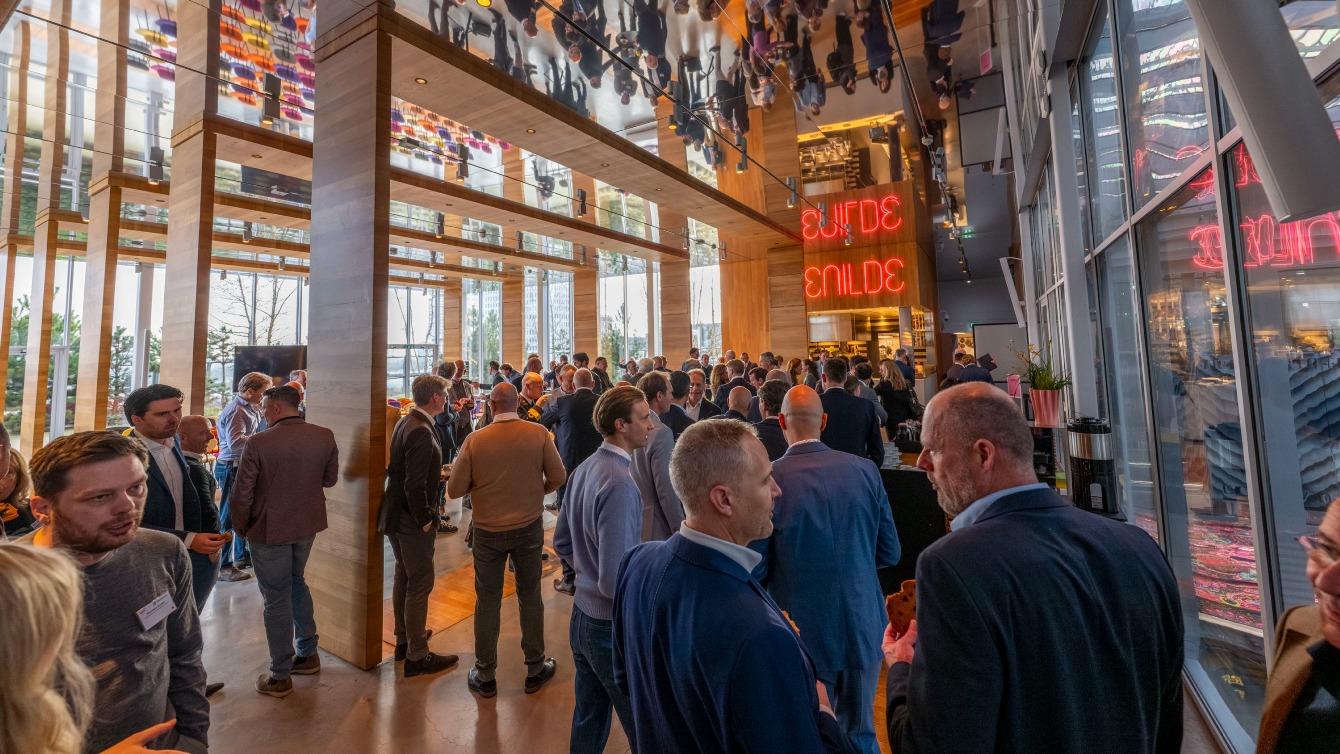
In this context, PwC and Deltalinqs recently hosted a symposium with partners VNCI, TLN/Fenex, and KBN, welcoming over 100 companies at the Depot of Museum Boijmans van Beuningen in Rotterdam. The theme: ‘What opportunities does cooperation with Defence offer the Rotterdam mainport?’ Bas Janssen, Director of Deltalinqs, noted, ‘Businesses and Defence need to collaborate and strengthen one another to keep society functioning in an increasingly turbulent world. Without earning capacity, we cannot invest.’
Investments open doors for business
Major opportunities are emerging for Dutch businesses within the defence value chain as the government commits to increasing core defence spending to 3.5% of GDP by 2035. This means that between 2025 and 2030, the Netherlands will invest approximately €178 billion in defence, with an estimated €41 billion potentially benefiting the Dutch manufacturing industry.
Additionally, Defence plans to invest another 1.5% of GDP in enhancing broader resilience and supporting areas like cybersecurity, logistics, and infrastructure.
PwC's recent study identifies around 3,400 companies that could play a role in this landscape. As Europe’s logistics hub and a major industrial cluster, the Rotterdam Mainport offers strong opportunities for entrepreneurs. The chemical sector, currently under pressure, can also collaborate with Defence. This year, Defence will actively engage with the chemical industry and, later this quarter, will present an action agenda with the Ministry of Economic Affairs and Climate Policy (EZK) to bolster the contribution of chemistry and materials to Defence.
Overcoming practical barriers
PwC's mainport expert, Bastiaan Evers, observes, ‘In practice, many companies have questions. They often don’t know where to go if they want to work with Defence and are sometimes unfamiliar with the conditions for doing so. There are strict security requirements, mandatory certifications, procurement and sales restrictions, and various compliance issues. Financing can be complex, and companies need to navigate their way as suppliers within the defence ecosystem. They must also be able to scale and understand where potential financing options and facilities are located, and how to make use of them.’
‘At the same time, the relationship between Defence and the private sector has been less intense for the last decades, which means it is not always clear for Defence what demand it should articulate towards industry. As a result, the two sides don’t yet find each other easily.’ The Rotterdam event provided practical tools to change this. State Secretary Gijs Tuinman explicitly invited the business community to engage.
Defence's call: building resilience together
Tuinman stated, ‘In a world marked by growing uncertainty and insecurity, we not only need a credible deterrent force to protect our way of life, but also a resilient society and a thriving economy. That brings us directly to the importance of the Port of Rotterdam as a logistics hub for our military allies. It is therefore encouraging to see people from the transport and logistics sector here today. You are the ‘oxygen’ of the armed forces when it comes to ensuring military mobility.’
‘From the perspective of strategic autonomy, we do not want our security to depend on unreliable or even hostile parties,’ Tuinman added. ‘That is why we are keen to work with Dutch companies. Anyone who believes they can contribute to Defence is welcome to contact us. Make sure you offer a clearly differentiated product. We will then not only procure the product ourselves, but also actively promote it among partners and allies worldwide.’
Procurement principles and the importance of ecosystems
Working with Defence presents entrepreneurs with several critical questions. To address these, Defence regularly organises challenges in which it collaborates with the market to find solutions for its current needs. For instance, one such challenge focuses on the ability to repair disabled combat vehicles on site using 3D-printed parts - known as Battle Damage Repair (BDR). This challenge will reopen soon, and companies will be able to register.
During the event, Defence representatives explained that their procurement approach is guided by several fundamental principles, one of the most important being risk reduction. To ensure security of supply, Defence prefers sourcing close to home, from suppliers with production facilities and, ideally, without monopoly positions, as monopolies increase dependency. Defence therefore encourages collaboration between parties so that multiple suppliers are available. This represents a breakthrough in the way Defence procures and can only succeed if industry and Defence work together closely.
Lessons from practice
The event also featured companies with hands-on experience in doing business with Defence. A supplier from the chemical industry explained that his company had not previously been on Defence’s radar because it is not an OEM, but supplies raw materials for products (manufactured by others and) used by Defence.
‘We are unique in our market because we source all our base materials within Europe. If we were to lose our production capacity, the Netherlands and the EU would risk becoming dependent on parties outside the European sphere of influence. To draw attention to the importance of strategic autonomy, we therefore joined forces with another supplier that serves similar applications and made our industry voice heard. As a result, we were jointly asked to develop an application, which is now ready for testing.’
A representative from the logistics sector stressed that Defence values an active role from potential partners: ‘We proactively propose alternative routes and help think through ways to reduce risks. Our trucks are never left standing still unnecessarily - because that would make them an easy target.’
Practical guidance for entrepreneurs
Throughout the event, numerous practical insights and concrete tips were shared with entrepreneurs interested in working with Defence. At the conclusion, our experts Willem-Jan Dubois and Henric van der Ent summarised the key takeaways: ‘As a company, ask yourself where you sit in the supply chain. The answer determines where your opportunities lie and whom you should approach. Defence is not always the first party for everyone. You may need to approach one of the system integrators or sub-component manufacturers instead, as they also require logistics or manufacturing capacity.’
If you want to get started with Defence, ask yourself the following four questions:
- How is my capability, product and/or service relevant for Defence?
- Whom should I approach? Defence itself or, for example, one of the OEMs?
- What does this require from my organisation? Am I ready for this? Can I deliver? With whom should I partner?
- How can I scale up and provide the fledxibility this challenge requires?
Beyond a business case
Finally, the event showed that working with Defence is not just about an attractive business case, but also about societal contribution. Evers concludes: ‘We see a growing sense of social responsibility among companies. As a society, we truly need to do this together - at NATO and European level, for the Netherlands as a whole, and certainly for the Mainport region we are all so proud of.’

Willem-Jan Dubois (PwC)

State Secretary Gijs Tuinman
Key considerations for entrepreneurs aiming to collaborate with Defence
- Commit for the long haul. Defence isn't a side project; it's a significant partnership.
- Be transparent. Share every detail across your supply chain.
- Trace origins locally. Ensure your sources are as close to home as possible.
- Apply the same to production. Keep your facilities traceable and accountable.
- Mitigate logistics risks. Take proactive steps to manage potential disruptions.
- Build alliances. Don't be the sole supplier; foster ecosystems and partnerships.
- Invest in growth. Show your readiness to learn, adapt, and innovate.
Want to know more about the opportunities for Dutch manufacturing companies in the defence industry?
Mobilizing the Dutch defense industry