










Midglas followed this specific sequence in consultation with PwC and ANVA, a platform supplier for the insurance market. The reason they chose this path is that, as well as being about new technology, IT is also about ambitions around growth, innovation, and high customer satisfaction. We found out why this approach makes all the difference in conversation with Rob Hennekam, director of operations and finance at Midglas, and Martin Holm, director at PwC.
Growth exposes weak spots
The growth of Midglas in recent years gradually revealed where the existing IT landscape was coming under strain, so the moment for reassessment did not come unexpectedly.
“Midglas has grown significantly in recent years, both in volume and as an organisation,” says Rob Hennekam. “That was the reason for us to conduct a critical review of our IT landscape, and it turned out to be in need of renewal. We had to critically examine our systems to remain innovative and continue pursuing high customer satisfaction.”
Growth reflects success but also reveals the limits of existing systems. It is a familiar pattern: what for a long time seems workable can suddenly become a brake on further growth.
Another factor in play for Midglas was that, although customer satisfaction was already high at 8.7, they did not want to rest on their laurels. Quite the opposite, Hennekam says: “We want to move towards a 9+ to set the standard as market leader.”
Make the underlying question the starting point, not the technology
PwC’s Martin Holm sees that too many organisations still approach IT modernisation as a technology issue, while the real challenge comes earlier in the process. “With Midglas, we first framed the key questions: what does the IT architecture currently look like? And what are the bottlenecks and problems that Midglas wants to solve within that architecture? We translated the responses into a future-proof solution that fits their wishes and needs.”
Holm’s point here touches on a broader lesson for the sector. Rather than being about selecting the right software, he sees the starting point of IT modernisation as gaining a clear picture of the objective: how architecture, processes, and data should come together in the future to truly help the organisation move forward. Without that picture, modernisation risks becoming a purely implementation-driven project that lacks cohesion. It may ultimately yield a new system, but one without a solid foundation.
Step-by-step modernisation of the IT landscape
To avoid this pitfall, Midglas, PwC, and ANVA took a step-by-step approach to modernisation. The first step was to design a customer-oriented and future-proof IT landscape. This was then developed into a functional design for a future back-office system; a technical design focusing on integration, execution, and security; and an information model supporting Midglas’s operations.
Only after this process was complete did the question arise of which core system would be the best fit. Based on an analysis of the market and Midglas’s requirements, ANVA was confirmed as the most suitable solution for policy and claims processes. “That may seem like a logical outcome, given that Midglas was already working with ANVA,” Holm explains. “But precisely for that reason it was important to reaffirm that the choice was transparent and well-founded—not out of convenience, but because the solution had to be the best one and the best fit within the broader future vision.”
A collaboration with clearly defined roles
For Hennekam, the value of the process lay not only in its substance but also in how the collaboration unfolded: “At first glance, it may not seem like an obvious match for a ‘big’ company like PwC working with Midglas, but it’s proven to be a very good way of working together—pragmatic and productive.”
An important factor was that Midglas remained in control throughout, Hennekam continues: “Although PwC guides us step by step on the journey we are making, with a team that has adopted Midglas’s mindset as its own, we remain in the lead. So in that sense, too, it is a good match.”
Holm sees this division of roles as crucial: “We experienced it exactly as Rob describes it. We bring in expertise from the insurance sector and from technological transformation, but the organisation itself must keep ownership of the decisions and direction.”
“Although PwC guides us step by step on the journey we are making, with a team that has adopted Midglas’s mindset as its own, we remain in the lead. So in that sense, too, it is a good match.”
Rob Hennekam,Director of Operations & Finance, Midglas
Pace is a cost factor, not a luxury
Another key insight from the process is that the ideal pace of implementation is not an abstract project goal: it is directly linked to cost and feasibility. If modernisation is delayed, old and new systems continue to run alongside each other for longer, project teams remain in place for longer, and innovation is delayed.
By creating clarity early on regarding system architecture, design choices, and constraints, Midglas was able to move towards the next phase more purposefully and with greater confidence, working together with users and ANVA to further detail products, processes, data, and communication flows. This phase was followed by implementation: from configuration and integrations to migration and testing.
More than a technology project
What this collaboration delivered encompasses more than a technical design or a well-founded choice of system. Midglas now has a concrete, shared foundation for further renewal of its IT landscape, with a clear target architecture, robust design choices, and a pragmatic implementation plan.
Questions? Feel free to reach out to:
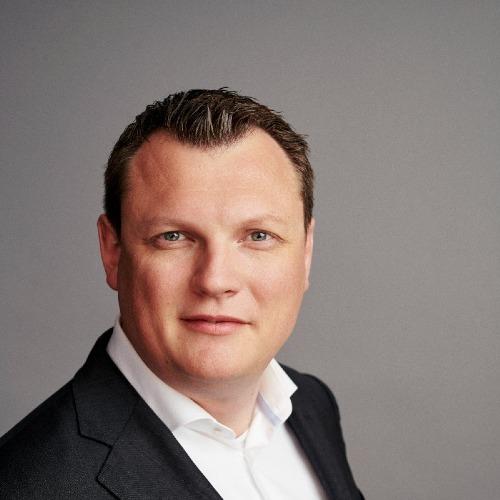
Martin Holm
Director FS Operations, PwC Netherlands


