









The future of how we build
PwC & Economist Enterprise
Human moments of problem‑solving, powered by technology, are triggering industry reconfiguration. Discover how modular construction, digital design, and cross-industry collaboration are reinventing how we build.

From housing pressure to the future of how we build
In Stockholm, Amina and Miguel confront the realities of housing scarcity as they try to build a future for their growing family, revealing how modular construction is changing how cities are built, faster and more sustainably.
Their story is set against the pressure of Stockholm’s housing shortage and follows families navigating housing queues and the people rethinking how homes are made. Their story shows how modular construction is shifting building away from one-off projects toward precision-manufactured systems - assembled in days, with less waste and greater certainty.
Building where people, technology, and industries come together
It begins with people addressing real challenges. In Stockholm, rising demand for housing is turning ideas into action. With families needing homes more quickly, urgency is sparking new approaches to construction. Architects, urban planners, and manufacturing teams are rethinking how housing is delivered, focusing on three priorities: speed, affordability, and sustainability.
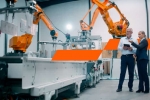
Sweden’s response has been modular construction. Homes are precisely produced in factory settings and then rapidly assembled on site, often within days. This method reduces waste, limits delays, and brings greater predictability to projects. What started as a housing solution is now evolving into something much broader. Innovations such as off-site production, digital design tools, and advanced energy systems are expanding beyond residential building.
These developments are shaping a new construction landscape in which builders, manufacturers, technology partners, investors, and insurers collaborate more closely. Together, they are enabling infrastructure to be delivered faster, more sustainably, and at scale.
What this means for leaders
The takeaway is clear: construction is no longer a standalone sector. It has become an interconnected ecosystem centred on the need for spaces where people can live, work, and connect. Those who move early to industrialise delivery and embed sustainability into their operations will be best positioned to capture emerging opportunities.
Find out more on how industries are converging on innovative ways to build