









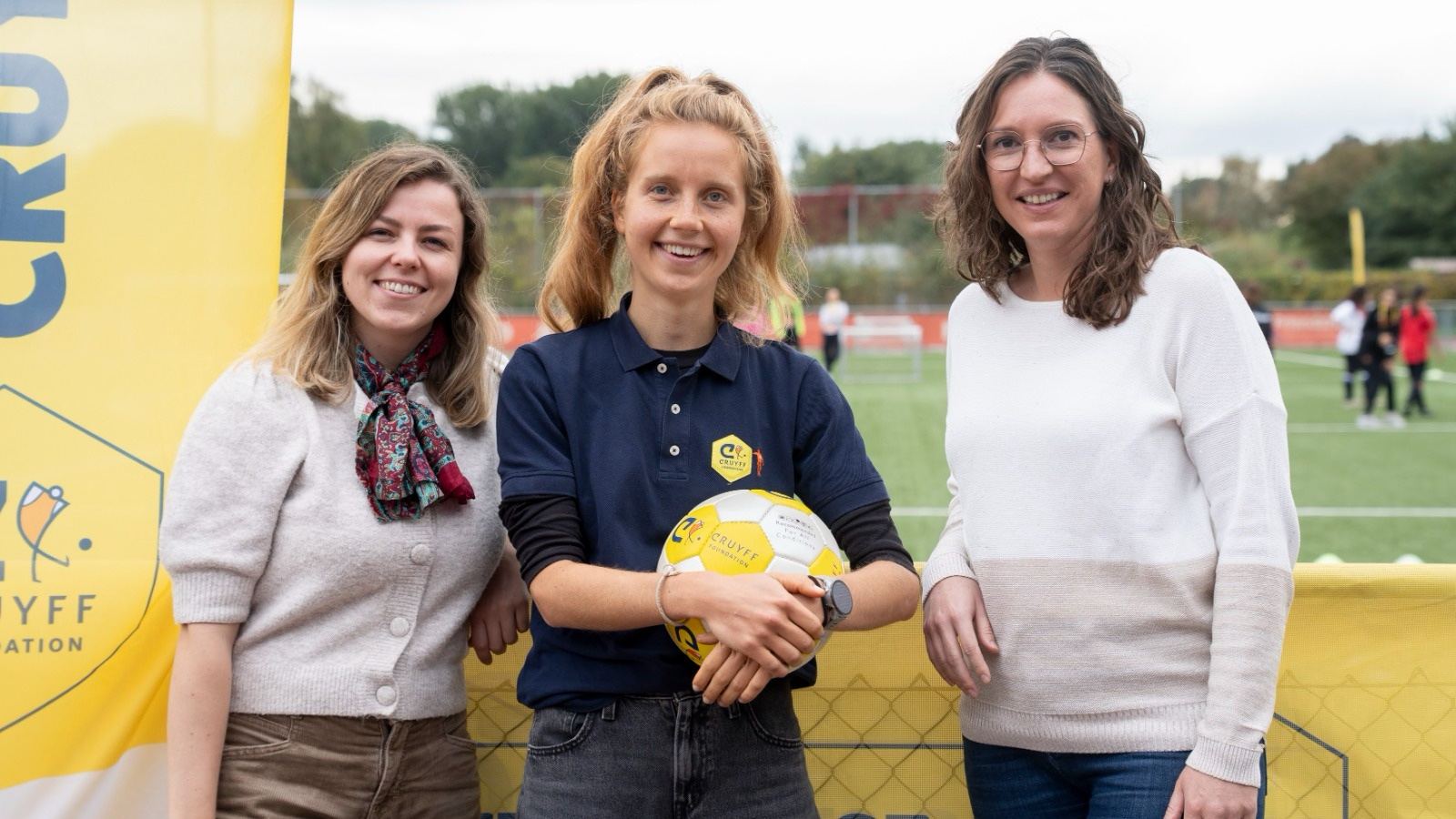
The Cruyff Courts are about more than just sport: they are places where children meet, build self-confidence, and discover what they are capable of. But girls do not always make as much use of the Courts as boys. That is something the Cruyff Foundation wants to change. The goal is for equal numbers of girls and boys to be taking part in sport at Cruyff Courts across the Netherlands by 2030.
Through joint research, the Cruyff Foundation and PwC identified the barriers girls face and what motivates them to take part in sport. The next step was to develop an online inclusion module to help coaches put these insights into practice in their day-to-day work.
“We want to encourage more girls to be active on the Cruyff Courts,” explains Maud Rustemeijer, social programmes project coordinator at the Johan Cruyff Foundation. “The coaches play an important role in this process: they work closely with the young people and can help ensure girls feel welcome.”
First step: understanding the situation
The development of the module began with listening. Judith de Haan, Public Sector manager at PwC, explains. “We gathered insights from girls, coaches, and parents, and on the Girls’ Day Event we spoke directly with many of them, asking them what motivates them to come to the Courts and what barriers they experience. We also talked to the coaches about their experiences, any specific issues they encounter with girls on the Courts, and what support they need.”
“This gave us an insight into the challenges girls encounter,” explains Eline Timmer, senior consultant in PwC’s Public Sector practice. “For example, some girls say boys tend to dominate the pitch or kick the ball too hard. Other girls don’t enjoy the games and mainly want to socialise and chat with each other. We translated these experiences into themes and then discussed them with the coaches.” Literature research and existing knowledge on inclusion also contributed to the design.

From practical experience to actionable tips
“When it comes to helping girls overcome the barriers they face,” says Timmer, “coaches indicated they also need practical tips and sometimes background information or research.” Even small changes can make a difference: if the route to a Court is dark in the evening, for example, girls could cycle there together or arrange to meet at a designated meeting point. And if there is no toilet nearby, a coach might be able to make the necessary arrangements with a local restaurant.
“The social aspect often plays a major role for girls,” Timmer explains: “The atmosphere within the group and a sense of belonging are important to them. That’s why it can help if you involve girls in deciding how groups are formed. Contact with parents is also crucial – explaining what goes on at the Court can help build their trust.”
Reflecting on the impact of decisions
In the next phase, the Cruyff Foundation and PwC translated these insights into a learning design. The Cruyff Institute, part of the World of Johan Cruijff umbrella organisation, then developed the learning design into an interactive digital environment, using audio, AI-generated videos, and exercises to recreate real-life situations. One example is an audio clip in which a coach calls a parent and is presented with two decision points. This allows coaches to reflect on their choices and the impact of those choices.

A toolkit for coaches
De Haan highlights that coaches can use the module flexibly: “This e-learning course for coaches has deliberately been designed with a practical focus. They can go straight to the topic that relates to a situation they’re encountering on the Court—there’s no need to work through the whole module from start to finish.”
“You can pick and choose from the toolkit to find what works for you,” says Rustemeijer. “We want to equip coaches with the knowledge they need to reach and involve girls more effectively. It’s about making sure girls feel seen and making room for what they need.”
Timmer is proud of the result: “It’s wonderful to see how our insights have become a practical e-learning course. The Cruyff Institute has really brought the design to life.”
Rustemeijer also looks back positively on the collaboration: “PwC was a real pleasure to work with. Everything was handled professionally, with great attention to detail. We really were a great team.”
The real test is what changes on the Cruyff Courts
The module is not an end in itself; it is a starting point. For Rustemeijer, the real value of the work ultimately lies in what is happening on the Courts themselves. “You see girls really coming into their own. They walk across the pitch almost like they’re queens, as if to say: this is my place! Sometimes dozens of girls from the neighbourhood turn up, and you see parents joining in too. That’s when you see how powerful sport can be as a way of bringing people together, developing yourself and fulfilling your potential.”
The e-module was launched during the second edition of the Cruyff Foundation Girls’ Day Event on Friday 16 October 2026 in Amsterdam. More than 300 girls and dozens of coaches took part in active workshops covering sport, mental resilience, and many other topics. The Cruyff Foundation Coaches were quick to share their first reactions: they are very pleased with the module.
This is what the collaboration between the Johan Cruyff Foundation and PwC aims to support: sharing knowledge, empowering coaches, and gradually building a sporting environment in which every child has the opportunity to take part.
Would you like to know more about the Johan Cruyff partnership?
Contact us


