









That gap is more than a reporting issue. If the figures are also missing internally, it becomes harder to compare sustainability investments, allocate capital and substantiate the claimed value.
The gap is mainly in resilience
Resilience is the fastest-growing category of value claims within those explicitly framed in business terms: its share of all value claims rose from 34 per cent in 2022 to 43 per cent in 2025. Yet these are precisely the claims that almost never include a figure: only 1 per cent is quantified. For revenue (around one in seven) and financing (around one in four), that is higher.
Across all types of claim the picture is the same. The number of value claims with a figure rose by only 9 per cent, against 122 for value claims overall. The exact figures depend on the model used and the counting method, but the direction does not: claims with a figure lag far behind.
Alongside claims about the business value of sustainability, many sustainability ambitions and targets are also insufficiently supported by figures. A total of 215,141 sustainability commitments were examined. Of these, 78 per cent do not contain a single number. Only 3 per cent state a baseline, a target and a current value. Emissions is the only theme where the share of commitments with quantitative substantiation rose clearly: from 31.9 to 34.4 per cent. It is also the theme with an established measurement method and growing external assurance.
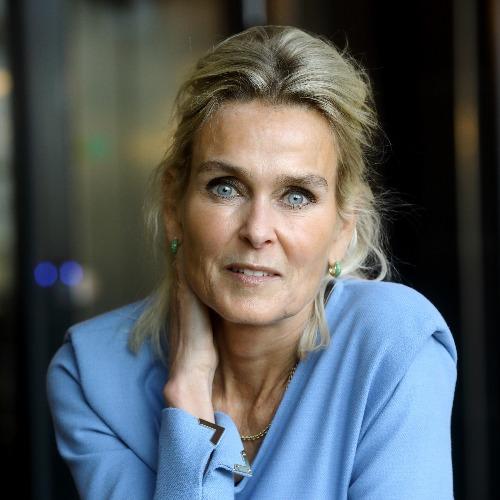
Barbara Baarsma, Chief Economist at PwC: 'Much of the value companies claim is a loss that did not occur. How do you value a factory that did not flood? That is hard to prove and easy to dispute.'
Why quantifying the value of sustainability is so difficult
Much of the value is an avoided loss. You then have to make plausible what would have happened without a measure. A widely accepted and applied measurement method is also often lacking. For CO2 such a standard exists, but for circularity and biodiversity it is less common. Moreover, accounting and management systems usually do not show which part of costs and revenues results from a specific sustainability measure. Establishing that financial contribution requires additional data and analysis.
On top of that, a published figure can be tested by auditors. That can make companies cautious.
Financial effects must be quantified more often
European reporting rules require companies to map the financial effects of sustainability risks and opportunities. Companies must describe qualitatively the anticipated financial effects from financial year 2028 and express them in figures from 2030. For companies that fall under the rules later, different timelines apply. Banks and investors are already asking for insight into financial effects.
There is also external pressure: geopolitical tensions, the 2022 energy price shock, extreme weather and disrupted supply chains. The public debate on sustainability has also become more polarised. An earlier PwC sentiment analysis of more than 46,000 Western news articles shows that sentiment around sustainability has become more negative and more polarised since 2020.
'A business case is apolitical,' says Baarsma. 'It shows that you can make money in a way that can compete with other investments. That is why it is so important to quantify, even if data is still missing.'
From claim to substantiated business case
Femke Helgers, partner Sustainability Strategy & Reporting at PwC, advises including sustainability in investment decisions. 'Do not wait until all data is available. Start with one concrete measure and map the potential effects on costs, revenues and risks. Then calculate how those effects play out in different scenarios. Compare the net present value with that of other options. This produces a range rather than a single figure, which you can adjust annually.'
That requires collaboration across disciplines. 'To truly quantify the financial effects, you need knowledge of sustainability, finance and risk management,' says Helgers. 'That collaboration does not happen automatically.' She gives an example: 'Climate risks can affect the value of your assets. Then you need climate scenarios, financial knowledge to determine the impact on your depreciation, and people from your risk management team to link it to your risk appetite.'
Wendy van Tol, partner Transformation Services at PwC, sees it as a change process: 'We are moving from doing good to doing good business.' In other words: from sustainability as good intentions to sustainability as part of the business case. 'If you want sustainability policy to survive a change of board, you want it embedded in a business case.'
How PwC helps
We help organisations translate sustainability risks and opportunities into financial effects. Using scenario analyses and financial modelling, we then map the potential effects on costs, revenues and risks. This gives boards and investors a better basis for their strategic choices and capital allocation.
Practice shows it can be done. With sustainability-linked loans, the interest margin falls when a target is met, and companies report on it. In the financial sector, data has shown that more sustainable companies have a lower credit risk. In the logistics sector too, a broader financial assessment can lead to different choices in transport. Looking not only at purchase costs but also at maintenance costs can lead to the conclusion that an electric vehicle is more financially attractive. At the same time, this can reduce CO2 emissions.
Start today
Baarsma: 'Without quantification, sustainability remains an ambition. With quantification, it becomes a business decision. The greatest threat to the sustainability agenda is not a lack of ambition, but a lack of insight into the value it creates.'
Those who start now build the data, methods and policies needed to substantiate the financial value of sustainability. This makes sustainability not only an ambition but also a factor in investment decisions and value creation.
Want to know more?
Read the full report and contact a PwC expert to make the financial value of sustainability initiatives measurable.
Download the report
The quantification gap