










The publication also compares the Netherlands with 26 other countries. While the Netherlands remains among the top eight performers, it must be careful not to lose ground to the international frontrunners with which it competes for businesses, talent, and investment.
The heatmap does not paint an entirely negative picture
The picture emerging from our Business Climate Heatmap is not entirely negative. The Netherlands continues to benefit from a number of key strengths, including a highly educated workforce, strong international connections, a high-quality digital infrastructure, and a well-developed financial system. Commenting on the findings, PwC Chief Economist Barbara Baarsma said: 'The message of the Business Climate Heatmap is twofold: the Netherlands still has strong fundamentals, but a favourable starting position is no guarantee for the future. Unless the Netherlands addresses its structural bottlenecks, our traditional strengths will become increasingly less valuable'.
Veronique Roos-Emonds, Chair of the Executive Board of PwC Netherlands, sees the results of the Business Climate Heatmap as a clear call to action and opportunity for businesses too. 'In a world increasingly defined by scarcity and uncertainty, strategic decision-making and effective execution have become ever more important. The Business Climate Heatmap highlights not only where the challenges lie, but also where new opportunities are emerging. Companies that invest in productivity, innovation and resilience are better positioned to succeed in a changing environment. Increasingly, it will not be the circumstances themselves, but an organisation’s ability to adapt, that determines who stays ahead.'
Not a cyclical downturn, but a structural shift
The Business Climate Heatmap tracks 67 indicators over the period from 2013 to 2025. It shows that the Dutch business climate improved between 2013 and 2018, but subsequently deteriorated significantly. Baarsma explains: 'Our three consecutive measurements indicate that the deterioration of the Dutch business climate is not merely cyclical in nature. Following the recovery around the COVID-19 period, no sustained recovery has been visible since 2022. The results point to a structural weakening of the business climate'.
Dutch business climate continues to perform well in an international comparison
The international comparison includes many EU countries, as well as Norway, Switzerland, the United States and Canada. This selection covers countries that are economically relevant to the Netherlands and is also influenced by data availability.
Between 2013 and 2025, the Netherlands outperformed most countries included in this comparison, remaining in the top eight throughout the period and ranking seventh in 2025. Nevertheless, the Netherlands has lost ground since 2013 relative to Switzerland, Norway, Luxembourg, Denmark, Finland, Sweden and Ireland (ranked eighth). Moreover, the gap with these countries has widened further since 2022, meaning that, in relative terms, the Netherlands ranked slightly lower in 2025 than it did in 2013.
Where are the biggest constraints in the business climate?
The most significant structural deterioration can be found in the indicators that measure the quality and effectiveness of government institutions. Indicators such as government effectiveness, the rule of law, regulatory quality, and business policy have not experienced a temporary decline. Instead, they have shown an almost uninterrupted downward trend since 2018. Baarsma comments: 'Seven consecutive years of institutional decline represent a trend that cannot be attributed to a single government, a specific crisis, or a temporary disruption. It points to a structural weakening of the government's ability to provide the predictability, quality, and execution capacity that businesses have been able to rely on for many years'.
Are there also positive developments?
There are certainly positive developments. For instance, the knowledge base continues to expand. Returns on research and development (R&D) are increasing, and net incomes are rising. However, these improvements are not translating into a stronger business climate, as they are being offset by rising costs, challenges in government execution, a lack of physical and environmental capacity, and shortages of growth capital. Baarsma notes: 'A growing gap is becoming visible between what the Netherlands invests and what it gets in return'.
How should we assess the Netherlands’ position relative to competing countries?
The heatmap presents a mixed picture. The Netherlands continues to perform strongly in international comparison, ranking seventh out of the 27 countries included in the analysis in 2025. This is partly because several other countries have experienced an even steeper decline in their business climate, including Belgium, Canada, Germany, the United Kingdom, the United States and a number of other EU member states.
At the same time, the Netherlands has lost ground since 2013 relative to countries such as Switzerland, Norway, Luxembourg, Denmark, Finland, Sweden and Ireland (which remains just behind the Netherlands in the rankings). The gap between the Netherlands and these countries has widened further since 2022. This is concerning, as these are countries that have traditionally competed with the Netherlands for investment, talent and economic activity.
In addition, several other European countries, including Portugal, Poland, Slovenia, Estonia and Lithuania, are gaining ground. As Baarsma notes: 'Our position may appear strong, but the trend is less reassuring. The Netherlands is losing ground to the leading economies of North-Western Europe. Competitiveness is not about where you stand today, but whether you are advancing faster than your competitors'.
What should the government do to improve the business climate?
According to Baarsma, the government's biggest challenge is not to develop new policies, but to address well-known bottlenecks related to housing, nitrogen regulations, energy infrastructure, permitting procedures, and regulatory burden. 'The challenge is not that we do not know what needs to be done; the challenge is that we are not getting it done. These bottlenecks do not require new plans, but rather choices and stronger execution capacity.'
Baarsma also argues that labour productivity growth should be placed at the centre of economic policy. 'Economic growth will no longer come from labour supply. In an ageing society, we therefore need to achieve more with fewer people. To raise labour productivity, the government should support the development, adoption, and scaling of technologies such as AI and robotics. In addition, it should encourage skills development and better management practices, while reducing regulations that unnecessarily delay productive investments.'
How should companies respond to the current business climate?
The Business Climate Heatmap provides companies with insight into the structural developments shaping their competitive position. Baarsma explains: 'Labour will remain scarce. Companies would therefore be wise to make their growth less dependent on hiring additional people and more dependent on technology, innovation, and better management. The businesses that continue to succeed will not be those that attract the most employees, but those that achieve the fastest productivity gains'.
Another key message for businesses is the need to build resilience. The Business Climate Heatmap shows that uncertainty has remained structurally high in recent years. Geopolitical tensions, trade conflicts, cyber threats, and supply chain disruptions appear to be becoming the norm rather than the exception. This calls for greater supplier diversification, less dependence on a single market, increased investment in cybersecurity, and a stronger focus on risk management. Baarsma adds: 'The world has become less predictable, and this uncertainty does not appear to be temporary. Companies that can absorb shocks create the space to continue investing and growing, even when conditions become challenging. Resilience is no longer insurance against exceptional events; it is a prerequisite for success'.
Discover all the insights from the Business Climate Heatmap.
Questions? Feel free to reach out to us:
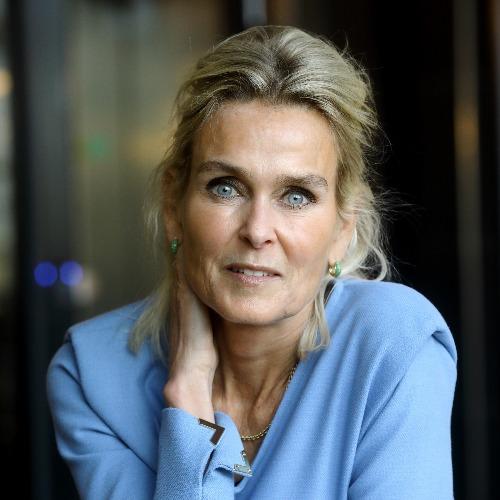
Barbara Baarsma
Chief economist, PwC Netherlands
Barbara is chief economist of PwC Netherlands and in this role she heads the economic office of PwC. Since 2009, she has been professor of Applied Economics at the University of Amsterdam. In addition, she holds various other societal positions.


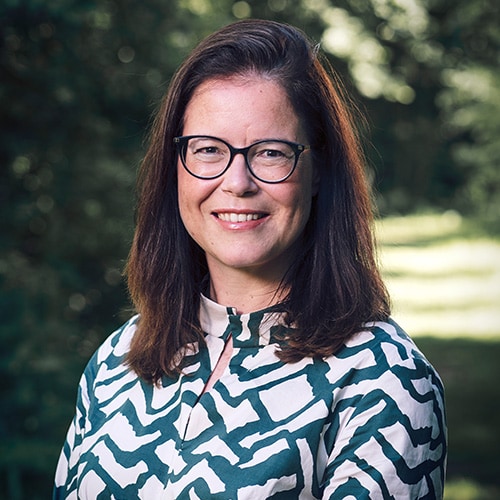
Veronique Roos-Emonds
Chair of the board of management, PwC Netherlands
As of 1 July 2026, Veronique Roos-Emonds is Chair of the Board of Management of PwC Netherlands. She has been with PwC since 2005, became a partner in 2014, and has led PwC’s European Advisory network since 2024. Together with the Board of Management, she continues to build an organisation that leads in trust, innovation and collaboration.


