









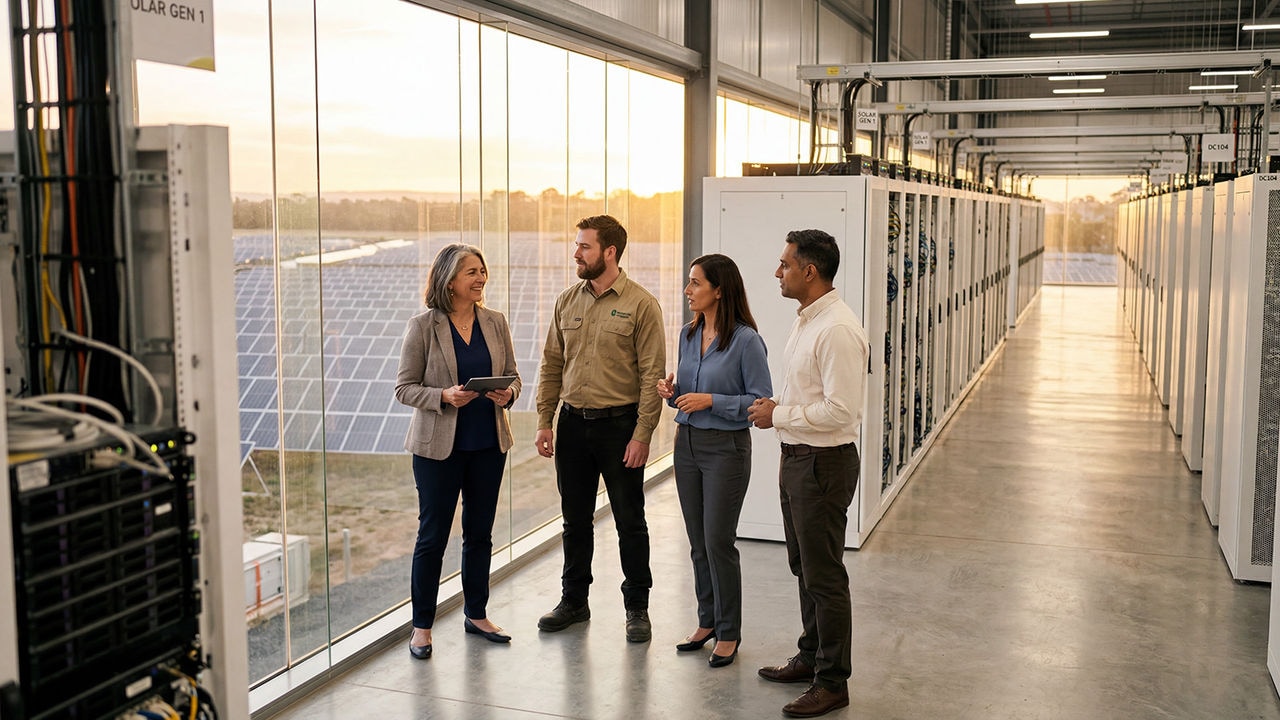
'AI is not the next step in digital growth; it is a fundamental shift,' says PwC partner Deepak Chadha about the biggest shift in the data centre market since the internet. 'It changes how we design, build, operate and monetise data centres.'
Why demand for capacity is soaring
AI workloads require far more computing power than traditional workloads. That is driving demand for data centre capacity sharply upwards. 'We see annual growth of fifteen to 25 per cent. By 2030, demand for data centre capacity is expected to triple', says Milos Jovanovic, expert at Strategy&.
This growth comes on top of existing digitalisation. More businesses and services are moving to online platforms. 'But AI is the real catalyst,' says Chadha. 'The use of AI has skyrocketed in a short time. And AI consumes three, five, sometimes ten times as much energy as a traditional workload. That adds up quickly.'
The biggest challenges for operators and investors
Yet growth is not a given. Operators and investors face several significant obstacles.
- Energy as a growth barrier
Without power, no data centre. 'Energy is no longer a choice; it's the basic requirement,' says Chadha. 'Anyone who cannot secure energy cannot grow. That's the hard reality.' In Western Europe, grid congestion adds to the headache. 'The data centre regions of the past – Frankfurt, London, Amsterdam, Paris, Dublin – are reaching saturation,' adds Jovanovic. 'That's why we're seeing a shift to regions with more space and energy, such as Scandinavia and Spain.' - Exploding energy density
An average AI-rack (a highly dense server enclosure designed to support intensive AI workloads) uses five times or more energy than traditional racks. With the latest systems, this can reach up to almost six hunderd kilowatts per rack. This has enormous implications for cooling and power supply. Investments in cooling and power distribution alone account for approximately sixty per cent of total CAPEX. - Regulatory pressure and community resistance
Especially in Europe, data centres are under pressure. Amsterdam imposed a moratorium. In Zeewolde, a Meta data centre was blocked. 'The short-term view is that data centres consume a lot of power and space without creating many jobs,' says Chadha. 'But in the long term, they are strategic assets. Without data centres, we cannot store data, develop AI or build digital sovereignty.' - The investment dilemma
You don't build a data centre in a few months. It takes years and tens of millions per megawatt, ranging from 7 to more than 50 million. 'Should you invest now in capacity when you're not sure demand will materialise?' asks Jovanovic. 'Or do you wait until demand is there and risk being too late? That's the tension in which operators and investors find themselves.'
What the winners in the market for datacentres do right
We see that the winners in this market do four things.
What this means for you
Whether you are an operator looking to renew your portfolio or an investor seeking opportunities: the time for waiting is over. The AI wave is not hype; it is a structural shift.
Chadha: 'Those who invest now in flexible capacity, energy security and the right partnerships are creating the infrastructure that will be indispensable tomorrow.' Jovanovic adds: 'The biggest pitfall is thinking that AI is "more of the same". It is fundamentally different. That calls for a fundamentally different approach.'
Download our whitepaper
‘Balancing the surging data centre demand with new requirements’