

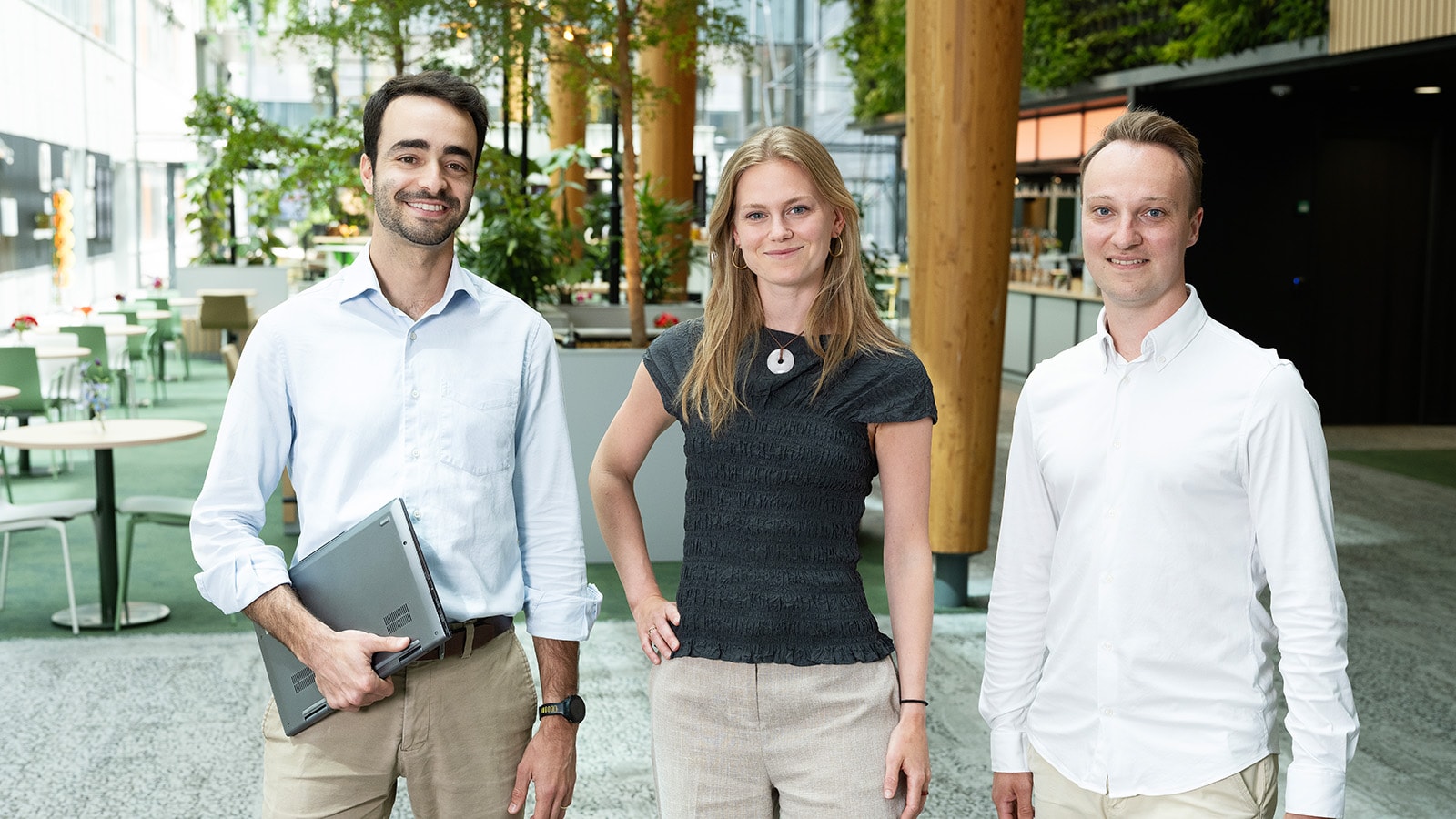
For Antonio (34), Maartje Eijssen (26), Ruben Stukart (32) and their colleagues, it became an assignment that felt different from anything they had done before. And yet, in some ways, it felt very familiar. Like other projects, it involved sharp analysis, collaboration and building solutions. The difference was that this time it was for an organisation with a clear mission: Closing the Loop.

“At PwC, you get opportunities you do not always expect. You work on major commercial engagements, but you can also use your knowledge and skills to contribute to social impact projects. That combination is what makes it so powerful.”
Antonio NiemeyerFrom waste problem to economic opportunity
Closing the Loop (CTL) works to reduce e-waste: discarded electronic devices and components, such as mobile phones. Around the world, this waste stream is growing rapidly. Much of it contains harmful substances, but also valuable metals such as gold and copper.
“E-waste is both a problem and an opportunity,” Ruben explains. “The materials can be reused in new devices. But when waste is processed improperly, it becomes harmful to both people and the environment.”
CTL is building a system in Nigeria where electronic waste is collected and recycled locally. This reduces harmful waste streams, increases reuse and creates new economic opportunities.
“E-waste is both a problem and an opportunity.”
Ruben Stukart
Three different roles
For Maartje, Ruben and Antonio, the world of e-waste was new territory. Strategy, business models and storytelling, however, were not. Those are at the core of their day-to-day expertise.
Maartje developed the financial model. “CTL wanted to invest in a machine that can smelt recovered metals. I mapped the costs, revenues and risks. I also analysed different scenarios: what happens if waste volumes are lower than expected? That helps investors make well-informed decisions.”
Ruben worked on the narrative that would help CTL engage investors and customers. “You do not just want to inform people. You want them to understand why this works and why it matters right now.”
Antonio was responsible for keeping the overall storyline on track. “What is the rationale behind investing in a particular country? What questions can we expect from different stakeholders, and what analyses do we need to answer them? How do you tell the story from different perspectives? Those were the questions I focused on.”
Work that helps you grow too
The project did not just move Closing the Loop forward. It also had a significant impact on the team themselves.
For Antonio, it was especially inspiring. “I was impressed by the people behind CTL. They have built a company that addresses an important social issue while creating economic value for investors at the same time. I think that is remarkable.”
At PwC, he works every day with ambitious colleagues who strive to get the best out of themselves. This project showed him that ambition can take different forms. “You can excel in your work and make a difference in other people’s lives at the same time. I found that incredibly valuable.”
For Maartje, who is still at the beginning of her career, the collaboration broadened her perspective. “At university, you often look at challenges in a theoretical way. Here, you see how knowledge is applied in practice. I thought it was fantastic that I could use experience gained in large organisations to help a smaller organisation with such a clear mission.”
Ruben looks back most of all on the tangible impact. “In Europe, we do a lot of recycling, but much of our waste ends up in Africa. I cannot solve that problem myself, but I am now far more aware of all the ‘waste’ we as humans create,” says Ruben.
“That is exactly why I was grateful to contribute to this pro bono project. An organisation like CTL does not automatically have the budget to develop a business model or a compelling story. The fact that our team was able to make a genuine difference in just three weeks felt special. Honestly, it was the most enjoyable project I have ever worked on.”

“At university, you often look at challenges in a theoretical way. Here, you see how knowledge is applied in practice. I thought it was fantastic that I could use experience gained in large organisations to help a smaller organisation with such a clear mission.”
Maartje EijssenTypically PwC: words and actions
According to Antonio, this project reflects the kind of employer PwC strives to be. “At PwC, you get opportunities you do not always expect. You work on major commercial engagements, but you can also use your knowledge and skills to contribute to social impact projects. That combination is what makes it so powerful.”
And perhaps even more importantly, it goes beyond good intentions. “When we have the opportunity to make a difference, we genuinely do. That is what makes PwC special to me.”
About Closing the Loop
Closing the Loop closes the electronics loop through its One for One programme: for every phone a customer brings to market, the customer pays a small fee that enables CTL to collect and responsibly recycle one discarded device in Africa. This gives valuable materials a second life and reduces harmful waste streams. In this way, CTL contributes to a circular economy with both social and economic impact.